Orthodontics is the dental specialty that corrects crowded teeth and jaw misalignments using scientific and aesthetic methods. There is no age limit: anyone with healthy gums and bone structure can be treated. Methods include metal or porcelain braces, clear aligners (Invisalign) and lingual orthodontics, and treatment can last between 8 and 24 months depending on the case.
- A personalised plan is prepared using panoramic X-rays and digital impressions.
- Brackets are bonded or clear aligners are handed to the patient.
- Monthly check-ups monitor tooth movement and make necessary activations.
- After braces are removed, retainers are used to stabilise the result.
Your smile is your most powerful signature in social communication. However, crowded teeth or misalignments in the jaw structure can negatively affect both self-confidence and oral health. Orthodontics is the dental specialty that resolves these problems using scientific and aesthetic methods.
Why Is Orthodontic Treatment Needed?
Braces treatment is not done just to "look good". The main benefits of orthodontic treatment are:
Improved Chewing Function: A proper fit between the teeth makes digestion easier and prevents jaw joint pain.
Easier Cleaning: It is hard to reach between crowded teeth. Straight tooth alignment reduces tartar formation and the risk of decay.
Correction of Speech Problems: Pronouncing certain sounds correctly depends on the position of the teeth.
Increased Self-Confidence: A healthy, straight smile allows a person to express themselves better in social life.
Current Braces and Orthodontic Methods
Thanks to advancing technology, wearing braces is no longer a process that restricts social life. The methods you can choose according to your needs are:
Metal Braces: Suitable for all age groups and all types of cases. Known as the most durable and most economical option in orthodontics.
Porcelain (Clear) Braces: Preferred especially by adult patients with aesthetic concerns. Because they are produced in tooth color, they are much less noticeable than metal braces.
Clear Aligners (Invisalign): A wire-free treatment method. Its greatest advantage is that it is removable. With its completely transparent structure, it is almost invisible from the outside and offers maximum comfort.
Lingual Orthodontics: Ideal for patients who want complete invisibility. In this method, the brackets and wires are attached not to the outer surface of the teeth but to the inner (tongue) side.
How Does the Orthodontic Treatment Process Work?
Orthodontic treatment usually consists of the following steps:
Initial Examination and Planning: A panoramic X-ray and digital impressions are taken and a personalized treatment plan is prepared.
Application: Depending on the chosen method, brackets are bonded or clear aligners are given to the patient.
Monthly Check-ups: The rate of tooth movement is checked by the dentist and the necessary adjustments are made.
Retention Phase: After the braces are removed, protective plates (retainers) are used to prevent the teeth from returning to their old positions.
Frequently Asked Questions
Can adults wear braces? Yes! There is no age limit for orthodontic treatment. Individuals of any age with healthy gums and bone structure can be treated.
How long does treatment take? Depending on the complexity of the case, it can vary between 8 and 24 months.
Does it hurt? When the braces are first fitted or after check-up sessions, slight pressure may be felt for a few days; this is temporary.
Why OptimaDent for Orthodontic Treatment in Üsküdar?
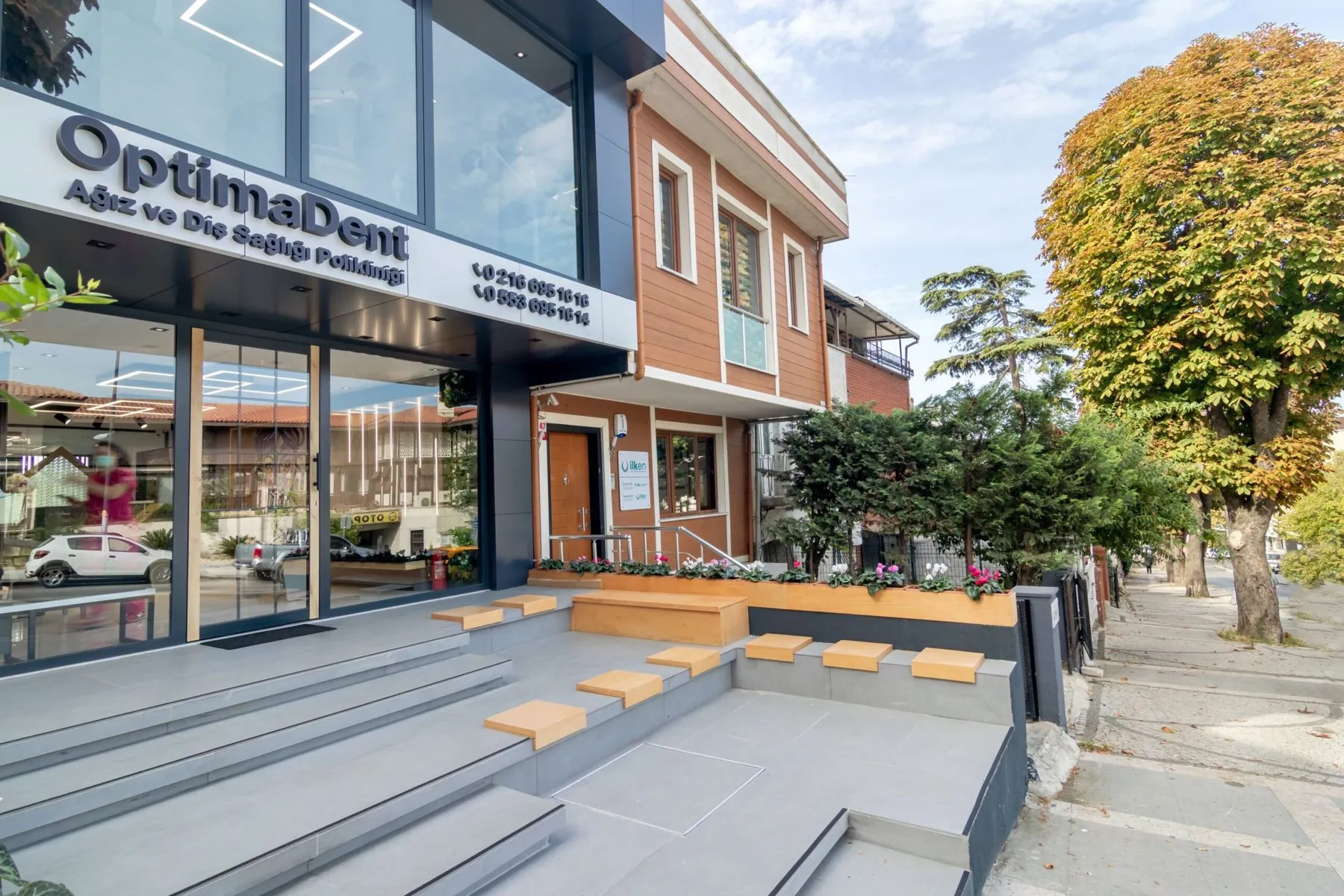
Located in Bağlarbaşı, Üsküdar, OptimaDent carries out highly precise orthodontic planning using the possibilities of digital dentistry. From clear aligner technology to classic metal brackets, we offer a wide range of solutions suited to each patient's needs and budget.
To achieve the smile of your dreams, you too can book an appointment at our clinic in Üsküdar, Istanbul, and create your personal treatment plan with our specialist orthodontists.
What Is Retention Treatment?
It is a protective treatment applied to prevent your teeth from returning to their old positions. Fixed and removable retainers are used for this purpose. Your doctor will choose the most suitable one for you.
Removable retainers are thin, transparent, invisible plates. You need to remove these retainers while eating or drinking. However, wearing these plates for the period recommended by your doctor is very important to prevent relapse.
Fixed retainers are bonded to the inner surfaces of your front teeth and hold the teeth together. Because they cannot be removed, they are easier to get used to. However, tartar builds up faster on these retainers (because patients cannot easily achieve adequate cleaning). If your fixed retainer comes loose for any reason, you should contact your doctor without delay. Tooth movements happen quite quickly.
Does Removing Braces Damage the Teeth?
When the braces are removed, the adhesive that bonds the brackets to the tooth surface comes away easily. After the braces are removed, the tooth surfaces are cleaned and polished. The protective enamel layer of your teeth is not damaged in any way.
Is Orthodontic Treatment Possible Without Tooth Extraction?
Orthodontic treatment does not require tooth extraction in every case. If jaw development is sufficient and there is enough space for the teeth to align, orthodontic treatment is possible without extraction. Your orthodontist will decide whether the treatment will involve extraction or not after carrying out the necessary examinations. Treatment with extraction usually occurs in treatments carried out after the growth and development period is complete. The teeth to be extracted are usually the premolars. Among these teeth, those with decay, fractures or periodontal problems are usually chosen for extraction. Since growth and development are complete, the space needed to align the existing teeth properly is obtained by extraction. At the end of treatment, you will not notice that these teeth are missing.
Will Braces Affect My Speech?
Speech and the correct pronunciation of sounds are of great importance in our relationships, our social life and our working life. In general, braces do not affect your speech; however, there will be a certain adaptation period when they are first fitted.
Fixed Orthodontic Treatment
This treatment method uses appliances called brackets, which are bonded to the tooth surface by the orthodontist and transfer force to the tooth, together with shape-memory wires that pass through them. The greatest advantage of fixed treatment is that it is bonded to the tooth surface and cannot be removed by the patient.
The brackets bonded to the tooth surface come in two types: metal and porcelain (tooth-coloured). Both types are suitable for all age groups.
During the first 2 days after your braces are fitted, it is perfectly normal to feel pressure, tightness, an inability to bring your teeth together, or numbness. These are signs that tooth movement has begun. During the adaptation period, parts of your cheeks and lips may become irritated. These are entirely temporary.
Invisalign (Wire-Free Orthodontic Treatment)
Before treatment, impressions are taken from the patient and scanned in 3D. The teeth are arranged on a computer and personalized aligners are prepared. Treatment is carried out with the prepared clear plates (aligners). It consists of a series of aligners that the patient can remove and that are changed every two weeks. The number of aligners also varies from person to person depending on the complexity of the treatment.
Invisalign treatment can be applied in all age groups to patients with mild to moderate crowding. However, treatment requiring tooth extraction is not suitable for Invisalign.
Since the removable aligners are under the patient's control, the patient should wear their aligner for about 20 hours a day. The aligners should only be removed while eating or drinking.
Lingual Orthodontics
This is a type of fixed orthodontic treatment. The brackets are bonded not to the visible surface of the teeth but to the inner side. It is a method recommended mostly for aesthetic reasons, for patients who do not want their braces to be visible. The treatment period is slightly longer. Because the brackets are on the inner side, speech difficulties and tongue sores may occur during the adaptation period.
Treatment with Removable Appliances
These are custom-made plates consisting of an acrylic part and wires. Since they are not bonded to the teeth, the patient can put them in and take them out. They are used when treatment can be achieved with small tooth movements, to guide jaw development, to prepare for treatment before orthodontic treatment, and after orthodontic treatment to ensure that the results are permanent.
Treatment with Functional Appliances
They are used to correct the position of the jaws relative to each other in skeletal disorders related to jaw development. They are custom-made. Patients can put them in and take them out themselves. Because they are used during the growth period and inserting and removing them is under the patient's control, patient compliance is very important.
Orthognathic Surgery
Orthodontic treatment alone may not be sufficient to correct skeletal disorders arising from jaw development. In these patients, in addition to orthodontic treatment, surgical treatment is also applied to correct the position of the jaws relative to each other and to the face.
Frequently asked questions
How long does orthodontic treatment take?
Treatment can vary between 8 and 24 months depending on the complexity of the case. It consists of the initial examination and planning, bonding of brackets or delivery of aligners, monthly check-ups and the retention phase. Lingual orthodontic treatment takes slightly longer.
Do braces hurt?
When braces are first fitted or after check-up sessions, mild pressure may be felt for a few days; this is temporary. Feelings of pressure, tightness or numbness during the first 2 days are quite normal and indicate that tooth movement has begun.
Is orthodontic treatment possible without extractions?
Extractions are not always necessary. If jaw development is sufficient and there is enough space for the teeth to align, treatment without extraction is possible. The orthodontist decides after the necessary examinations; extractions usually occur in treatments after growth is complete.
Who is Invisalign suitable for?
Invisalign can be used in all age groups for patients with mild to moderate crowding, but it is not suitable for treatment that requires extractions. The aligners are changed every two weeks and should be worn for about 20 hours a day.