
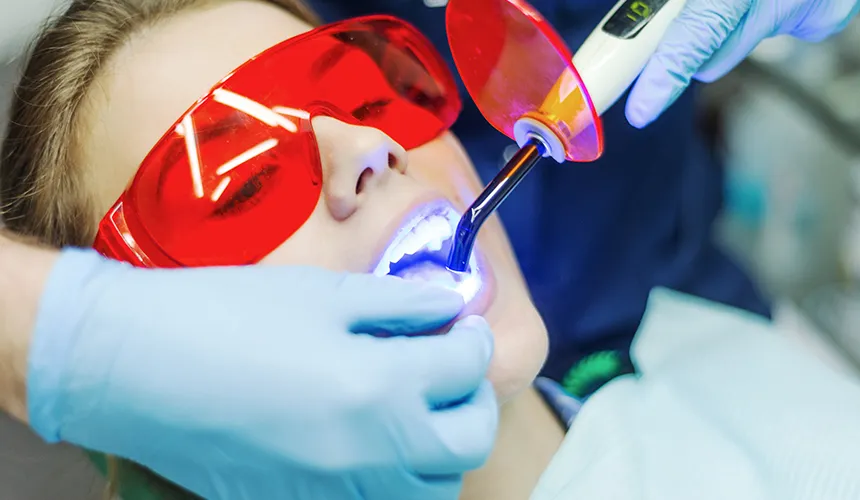
Teeth whitening (bleaching) is a chemical procedure used to remove discolouration within the enamel and dentin and lighten the tooth colour by several shades. Unlike routine scaling, which cleans surface stains, it aims to change the tooth's own internal colour. It is performed in the clinic as in-office whitening or at home with custom trays under dentist supervision.
- In-office whitening usually gives visible results in a single 45-60 minute session.
- At-home whitening uses custom trays regularly for 1-2 weeks.
- Avoid staining substances such as tea, coffee and cigarettes for 48 hours.
- Sensitivity to cold and heat is normal for the first few days.
What Is Teeth Whitening (Bleaching)?
Teeth whitening is a chemical procedure used to remove discolouration within the structure of the teeth (in the enamel and dentin layers) and to lighten the tooth colour by several shades. This procedure differs from routine dental cleaning (scaling), which removes stains from the tooth surface, because it aims to change the tooth’s own internal colour.
As one of the first and most popular treatments that come to mind when dental aesthetics is mentioned, teeth whitening is a must for anyone who wants a healthy, impressive smile. Daily habits, diet and age can cause teeth to lose their natural whiteness over time.
Here is a comprehensive guide to the teeth whitening process, its methods and everything you may be wondering about:
Why Do Teeth Change Colour?
The main factors that cause teeth to yellow or become stained are:
-
Diet: Heavy consumption of coffee, tea, wine and acidic drinks.
-
Tobacco Use: The tar and nicotine in cigarettes and tobacco products.
-
Ageing: Thinning of the outer enamel layer over time, making the yellowish dentin layer beneath more visible.
-
Medication: Certain antibiotics taken in childhood.
-
Genetics: A naturally darker tooth structure from birth.
What Are the Teeth Whitening Methods?
Teeth whitening treatments generally fall into two main categories:
1. In-Office Whitening (In the Clinic)
This is the professional method applied by the dentist in the clinic. The fastest and most effective results are achieved with this method.
-
How Is It Done? The gums are covered with a protective layer, a high-concentration whitening gel is applied to the teeth, and the gel is activated with a special light source (laser or LED).
-
Duration: Visible results are usually achieved in a single session of 45-60 minutes.
2. At-Home Whitening (With Custom-Made Trays)
This is a method supervised by the dentist but applied by the patient at home.
-
How Is It Done? Impressions of the mouth are taken and custom clear trays are made. The patient applies the special gel provided by the dentist into these trays and wears them on the teeth for a set time each day (usually 4-8 hours).
-
Duration: To reach the desired whiteness, the treatment must be applied regularly for 1-2 weeks.
What to Keep in Mind After Teeth Whitening
To make the results last longer and prevent possible sensitivity, follow these rules:
-
Follow a “White Diet”: The first 48 hours after the procedure are when the tooth enamel is most permeable. Stay away from staining substances such as tea, coffee, tomato paste, sour cherry juice and cigarettes.
-
Preventing Sensitivity: Sensitivity to hot and cold in the first few days is normal. You can use the desensitising toothpastes recommended by your dentist.
-
Oral Care: Regular brushing and flossing extend the life of the whitening.
Frequently Asked Questions
Does teeth whitening damage the teeth? Professional whitening performed under a dentist’s supervision causes no permanent damage to tooth enamel. However, uncontrolled and overly frequent applications can lead to enamel erosion.
How long does the effect last? The effect of teeth whitening lasts between 6 months and 2 years, depending on the person’s oral hygiene and dietary habits.
This article is for general information purposes. To determine the most suitable method for you and achieve a healthy result, you should always consult a dentist.
For any questions and appointments, feel free to contact us.
Does teeth whitening damage the teeth?
Professional whitening performed under a dentist’s supervision causes no permanent damage to tooth enamel. However, uncontrolled and overly frequent applications can lead to enamel erosion.
What Causes Tooth Discolouration?
- Age
- Dentin hypercalcification
- Frequent consumption of staining foods and substances such as tea, coffee and cigarettes
- Mouthwashes
- Materials used during root canal treatment
- Discolouration due to long-term medication use
- Discolouration due to excessive fluoride intake
- Discolouration due to bleeding inside the tooth caused by trauma
- Systemic diseases
- Discolouration due to developmental defects of the teeth
Who Should Not Have Teeth Whitening?
- Severe tetracycline staining (it will be difficult to achieve the desired whiteness)
- Young patients in the growth and development period with large pulp chambers
- Patients with unrealistic aesthetic expectations
- Loss of tooth substance due to wear on the tooth surface
- If there are teeth with cracks or fractures
- If there is deep decay
- If there are teeth with lesions
- If the patient has sores in the mouth
- If there are teeth with root surfaces exposed due to gum disease
- Pregnant or breastfeeding mothers (the effect on the baby is unknown)
- Tobacco users
- Teeth that are highly sensitive to heat, cold, touch or sweets (the sensitivity should be treated first)
- If the integrity of the enamel and dentin has been lost due to systemic conditions (such as amelogenesis imperfecta or dentinogenesis imperfecta)
What Problems Can Occur After Whitening?
Some reversible sensitivity occurs during and after the whitening procedure. These include:
- Increased sensitivity to heat and cold on the first day
- Sharp, shooting pain in some teeth
- Redness and a burning sensation in the gums
- Whitening and a burning sensation in the gums, tongue and surrounding tissue if the agent leaks onto them
What Should You Pay Attention to After Teeth Whitening?
You can continue cleaning your teeth as usual. For the first 48 hours, foods and drinks that can stain the teeth should not be consumed. These include:
- Tea
- Coffee
- Cigarettes
- Red wine
- Chocolate
- Caramel
- Tomato paste, ketchup
- Soy sauce
- Beetroot
- Şalgam (fermented turnip juice)
- Sour cherries, pomegranates, blackberries, cornelian cherries, rosehips
- Herbal teas
- Parsley, fresh mint,…
- Red cabbage
- Acidic foods and drinks (may increase sensitivity) (vinegar, lemon, orange, mandarin, grapefruit, plum, citric acid, cola, Fanta, fruit juices,…..) Very cold and very hot foods and drinks can also increase sensitivity.
Frequently asked questions
Does teeth whitening damage the teeth?
Professional whitening performed under dentist supervision causes no permanent damage to tooth enamel. However, uncontrolled and overly frequent applications can lead to enamel erosion. For this reason, a dentist should be consulted to determine the most suitable method.
How long does the effect last?
The effect of teeth whitening lasts between 6 months and 2 years, depending on the person's oral hygiene and dietary habits. Regular brushing and flossing help extend the life of the whiteness.
Who should not have teeth whitening?
It is not suitable for pregnant or breastfeeding women, tobacco users, young patients in the growth period with large pulp chambers, or people with deep cavities, cracked or fractured teeth or sores in the mouth. Excessively sensitive teeth must first be treated for sensitivity.
What problems can occur after whitening?
Reversible sensitivities may occur: marked sensitivity to heat and cold on the first day, lightning-like pain in some teeth, and redness or a burning sensation in the gums. Desensitising toothpastes recommended by the dentist can be used.