
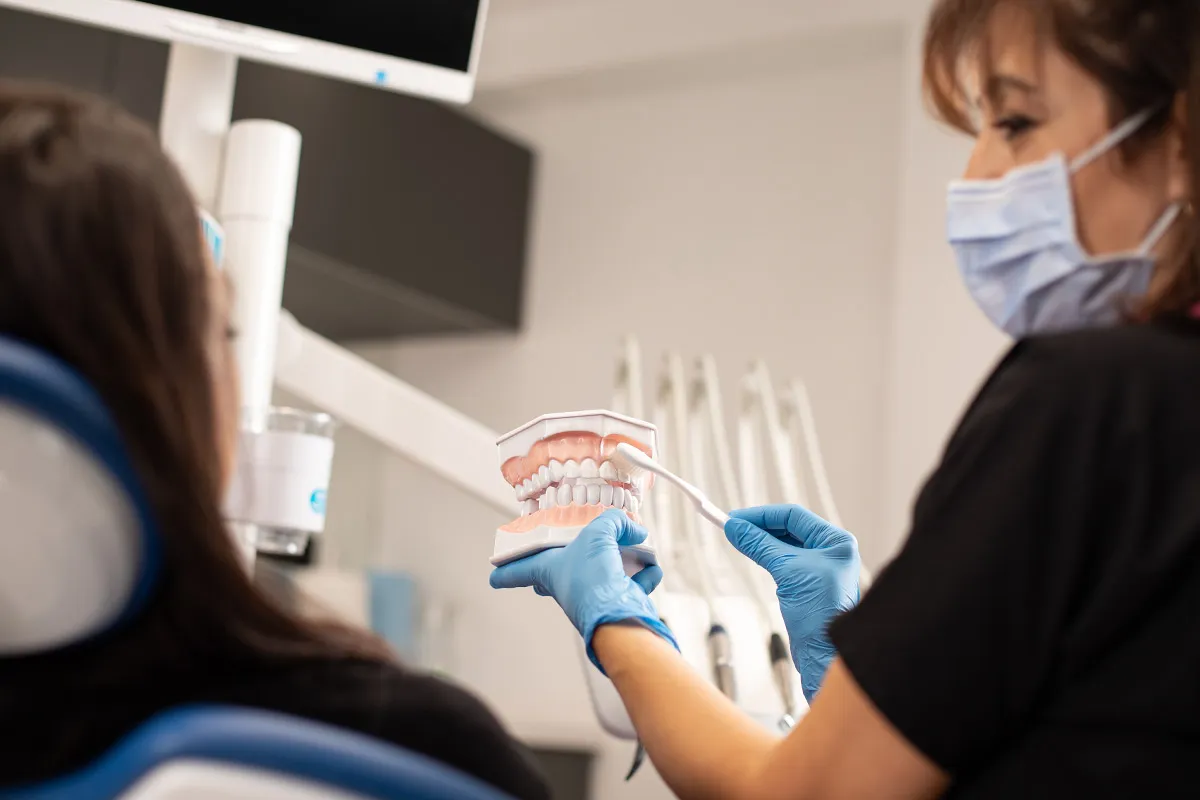
Periodontics is the specialty concerned with diagnosing and treating diseases of the soft and hard tissues that surround the teeth and attach them to the jawbone, particularly the gums. It is recommended for people with bleeding gums, swelling, bad breath, gum recession or loose teeth. Treatment includes scaling, deep cleaning (curettage) and, where necessary, periodontal surgery.
- For people with bleeding, red, swollen or receding gums.
- Scaling requires no anaesthesia and is usually completed in one session.
- Curettage is done in sections under local anaesthesia over several sessions.
- Brush at least twice daily, floss and have check-ups every 6 months.
Healthy teeth do not just mean teeth that are white and free of decay. The health of the gums and of the tissues that surround the teeth and attach them to the jawbone is just as important. Periodontics (periodontology) is the specialist field concerned with the diagnosis and treatment of diseases affecting these soft and hard tissues around the teeth.
What Are the Symptoms of Gum Disease?
Gum disease usually progresses painlessly, so patients often notice it late. If you have any of the following symptoms, it is time to see a periodontist:
Bleeding gums: Bleeding during brushing or flossing.
Swelling and Redness: Healthy gums are light pink; red and swollen gums are a sign of infection.
Bad Breath: Persistent bad breath and a bad taste in the mouth.
Gum Recession: Teeth starting to look longer than they are.
Loose Teeth: Teeth moving apart from each other or shifting position.
Stages of Gum Disease
Gum disease is basically divided into two main stages:
1. Gingivitis (Early Stage)
This is the earliest stage of gum disease. Plaque that forms when the teeth are not cleaned properly irritates the gums. At this stage the gums bleed and are red, but bone loss has not yet begun. It can be completely reversed with a professional scaling (tartar cleaning).
2. Periodontitis (Advanced Stage)
Untreated gingivitis turns into periodontitis over time. At this stage, the inflammation reaches the bone tissue beneath the gums. Spaces called "pockets" form between the tooth and the gum, and bacteria accumulate in these spaces. The result is bone loss and tooth loss.
The Relationship Between Gum Health and General Health
Scientific research shows that gum inflammation is not limited to the mouth. Periodontal problems that are not brought under control can increase the risk of heart disease, diabetes and premature birth. For this reason, gum treatment is the first step in protecting your overall health.
What Should Aftercare Be Like Following Periodontal Treatment?
The success of the treatment depends on aftercare following the procedure. As recommended by your dentist, you should:
Brush your teeth at least twice a day using the correct technique,
Use dental floss or an interdental brush regularly every day,
Have regular dental check-ups every 6 months.
The Most Common Causes of Gum Recession
Gum recession may be caused by a single factor or by a combination of several factors:
Hard Tooth Brushing: Brushing the teeth too hard or with the wrong technique (horizontally) wears away the thin gum tissue.
Genetic Factors: Some people inherit a thinner gum structure and are more prone to recession.
Periodontal Diseases: Infections caused by the build-up of tartar and plaque destroy the bone and tissue that support the gums.
Incorrect Tooth Positions: Irregularities in tooth alignment (crowding) can place excessive load on certain teeth and lead to gum recession in that area.
Tobacco Use: Smoking impairs blood flow in the gums, slowing healing and accelerating recession.
5 Golden Rules to Prevent Gum Recession
Use a Soft Brush: Brush gently with brushes labelled "Soft" or "Extra Soft".
Flossing Is a Must: Complete hygiene cannot be achieved without removing the bacteria between the teeth.
Regular Check-ups: Have a scaling (tartar cleaning) done by a specialist periodontist every 6 months.
Nutrition: Foods rich in vitamin C support gum tissue.
Watch Out for Grinding: Teeth grinding (bruxism) triggers recession; use a night guard if necessary.
What Do Healthy Gums Look Like?
- Light pink, dusty rose in color,
- Matte,
- With an orange-peel texture on the surface,
- Firm in consistency,
- Shaped to follow the contours of the teeth.
An infection starting in the gums shows itself as bad breath, a red, fragile and shiny appearance, bleeding, gum recession and tooth sensitivity.
Apart from the routine treatments carried out to maintain gum health, giving the gums a new contour, lengthening the teeth and reducing the visibility of excessively visible gums are also among gum treatments.
How Can You Tell If You Have a Gum Problem?
- If your gums bleed spontaneously, while brushing or while flossing
- If your gums look swollen as if they are separating from the tooth surface
- If your gums look red and shiny
- If you have sensitivity in your teeth
- If any of your teeth are loose
- If you have developed bad breath
- If your gums are receding
- If you feel that the length of your teeth has changed (longer or shorter)
- If you have a metallic taste in your mouth
then you have a gum problem.
Teeth clenching and grinding habits, smoking, stress, pregnancy, mouth breathing, diabetes, AIDS, leukemia and certain medications are factors that increase gum problems.
Although gum problems can lead to acute conditions, they are usually painless. For this reason, routine dental check-ups are important.
What Happens If Gum Problems Are Not Treated?
In the early stage, gum disease shows itself as bleeding, redness and swelling of the gums and sensitivity in the teeth. If left untreated, the bacterial infection begins to destroy the bone tissue around the teeth. As a result of bone destruction, the teeth become loose, shift position and gaps open up between them. After a while, you will even lose your teeth. At the same time, the bacterial infection in the mouth also has a negative effect on our general health.
Is the Treatment of Gum Disease Painful?
The treatment of periodontal disease may require several stages. Some of these stages are performed under anesthesia, and the patient does not feel any pain. There may be sensitivity in the teeth after treatment. This sensitivity also disappears after the healing period.
How Is Periodontal Disease Treated?
- Scaling (Tartar Cleaning): This is the removal of visible tartar and plaque attached to the tooth surface above the gum line. No anesthesia is needed for this procedure. It is usually completed in a single session.
- Curettage (Deep Cleaning): Scaling is not always enough to resolve gum problems. Deposits below the gum line need to be removed. This is done in several sessions under local anesthesia, with the mouth divided into sections.
- Periodontal Surgery: After curettage, the gums are re-evaluated. If necessary, the gums are opened under local anesthesia and cleaned. Procedures aimed at regaining lost tissues are carried out.
Does Scaling Damage My Teeth?
The ultrasonic instruments used during scaling act only on the deposits on your tooth surface. They do not cause any wear or cracks in your teeth.
How Often Should Teeth Cleaning Be Done?
Unless your dentist tells you otherwise, we recommend having your teeth cleaned every 6 months. This interval may be shortened or extended according to your doctor's observations.
Does Teeth Cleaning Cause Bleeding?
Teeth cleaning is a procedure carried out to eliminate inflammation in your gums. It is normal for your gums to bleed during the procedure. However, you will not feel any pain during it. Depending on the extent of your gum problem, the bleeding will stop on its own within 1–2 hours.
Will the Color of My Teeth Change After Cleaning?
During scaling (teeth cleaning), the stains that have built up on the teeth are removed. As a result, you may feel as if your teeth have become lighter. In fact, what is revealed is the natural color of your teeth. If you want your teeth to become fully lighter, you need to have them whitened.
What Should You Pay Attention to in Order to Protect Gum Health?
- Teeth should be brushed at least twice a day, especially after breakfast in the morning and before going to bed at night.
- Dental floss should be used so that the surfaces between the teeth can also be cleaned.
- Mouthwash should be used to prevent plaque formation.
- The surface of the tongue is very favorable for the accumulation of food. To complete oral cleaning, the tongue surface should also be brushed.
- Regular dental check-ups should not be neglected.
What Is Gum Recession?
It is the exposure of the root surface as a result of the gum moving from its proper position towards the root tip.
What Are the Causes of Gum Recession?
- Plaque and tartar build-up
- Gum inflammation
- Incorrect tooth brushing
- Brushing the teeth too often
- Crowded teeth
- Teeth clenching (bruxism)
- Incorrect use of toothpicks
- Genetics
- Aging
- Constant trauma to the teeth, such as nail biting or pen chewing
What Problems Does Gum Recession Cause?
As a result of gum recession, the root surface of the tooth is exposed; if this area cannot be brushed well, decay develops. Tooth sensitivity occurs. Aesthetics deteriorate.
Gum recession is not just a problem that concerns the gums. It is also a sign that the bone around the tooth is resorbing. Over time, teeth with gum recession may become loose, shift position, develop gaps between them and the other teeth, and may even be lost through loosening.
Can Gum Recession Be Stopped?
Gum recession can be stopped by eliminating the factors that cause it and with regular oral care.
Is There a Treatment for Gum Recession?
Gum recession can be treated by repairing the damage and eliminating the sensitivity that has developed on the tooth surface. If the recession is advanced, gum surgery can be performed.
Bad Breath
Bad breath is a problem that seriously affects our social life. The person's self-confidence decreases, they do not want to talk and they try to keep their distance from the people around them.What Are the Causes of Bad Breath?
- Poor oral care
- Numerous and deep cavities
- Tonsillitis
- Mouth ulcers
- Digestive system diseases
- Dry mouth
- Ill-fitting and poorly maintained dentures
- Use of medications that reduce saliva flow
Is There a Way to Get Rid of Bad Breath?
It is possible to get rid of bad breath by having your dental and gum treatments done, renewing ill-fitting dentures, brushing your teeth regularly, using mouthwash, brushing the surface of your tongue and using dental floss. If your salivary glands produce little saliva or you are taking medications that reduce saliva flow, to eliminate the odour caused by dry mouth you can take medications that increase saliva flow, chew sugar-free gum and drink plenty of fluids.
For bad breath caused by systemic diseases, in addition to having those diseases treated, you should also take care of your oral health. Using mouthwash will give you considerable relief. You can chew sugar-free gum. You can add cinnamon to your food and drinks as a flavoring.
Frequently asked questions
Is gum disease treatment painful?
Treatment may involve several stages, and because some of them are performed under anaesthesia, the patient feels no pain. The teeth may be sensitive after treatment; this sensitivity disappears once the healing process is complete.
Does tartar cleaning damage the teeth?
The ultrasonic instruments used for tartar cleaning act only on the deposits on the tooth surface and cause no wear or cracking of the teeth. Unless the dentist advises otherwise, a cleaning every 6 months is recommended.
What happens if gum disease is left untreated?
The bacterial infection begins to destroy the bone tissue around the teeth. As a result, teeth become loose, shift position and gaps appear between them; eventually the teeth may be lost. The infection in the mouth also affects general health negatively.
Can gum recession be stopped?
Gum recession can be stopped by eliminating the factors that cause it and maintaining regular oral care. Treatment involves repairing the damage and sensitivity on the tooth surface; if the recession is advanced, gum surgery can be performed.