
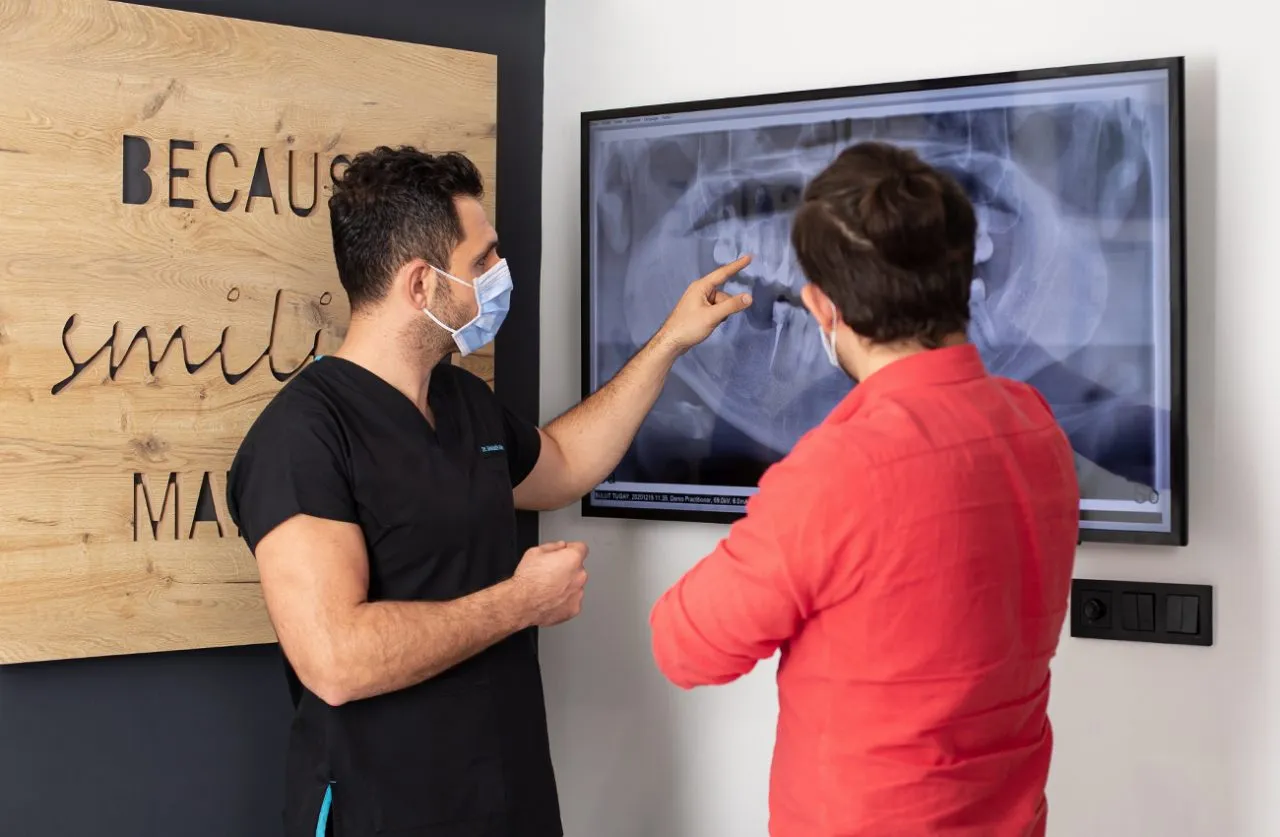
Oral and Maxillofacial Surgery is the branch concerned with diagnosing and surgically treating disorders of the soft tissues in the mouth, the teeth, the jaws and the jaw joint. It ranges from simple extractions and impacted teeth to implants, cyst and tumour surgery, jaw joint treatment and orthognathic surgery. Procedures can be performed under local or general anaesthesia.
- Covers impacted wisdom teeth, implants, cysts and jaw joint problems.
- See a jaw surgeon for persistent mouth sores or painful impacted teeth.
- After extraction, do not eat until numbness wears off; avoid smoking for 48 hours.
- Applying an ice pack for the first 24 hours reduces swelling and bruising.
Oral and dental health is a very broad field of expertise that is not limited to brushing your teeth. One of the most critical areas of this field, Oral and Maxillofacial Surgery, plays a vital role in solving both aesthetic and functional problems.
Here is everything you need to know about this specialty, its areas of treatment and the recovery process:
What Is Oral and Maxillofacial Surgery?
Oral and Maxillofacial Surgery is the branch of medicine and dentistry concerned with the diagnosis and surgical treatment of all disorders of the soft tissues of the mouth (tongue, cheeks, lips, salivary glands), the teeth, the jaws and the jaw joint.
This specialty covers a wide range, from a simple tooth extraction to complex jaw fractures, and from tumour operations to aesthetic jaw corrections.
Main Areas of Treatment and Procedures
Oral and maxillofacial surgeons can perform various operations under both local and general anaesthesia. The most common treatments are:
1. Impacted Tooth Surgery
Wisdom teeth in particular may remain impacted or partially impacted when there is not enough room for them in the jawbone. This causes pain, infection and damage to neighbouring teeth. These teeth are safely removed through surgery.
2. Dental Implant Treatment
Titanium screws (implants) placed in the jawbone to replace missing teeth are one of the most common procedures in oral surgery. Where there is insufficient bone, the foundation is prepared with advanced surgical techniques such as sinus lifting or bone grafting.
3. Jaw Cysts and Tumours
Removing pathological growths (cysts or tumours) that form inside the mouth or in the jawbone, and repairing the area, falls within this specialty. Early diagnosis is critical for protecting the surrounding tissues.
4. Jaw Joint (TMJ) Disorders
Noises when opening and closing the mouth, jaw locking or chronic facial pain may indicate jaw joint problems. These problems are treated with surgical or non-surgical methods (splints, joint lavage, etc.). 5. Orthognathic Surgery (Jaw and Facial Aesthetics) In cases where the lower or upper jaw is positioned too far forward, too far back or crooked relative to each other or to the face, these are operations in which the position of the jaws is corrected in addition to orthodontic (braces) treatment.
When Should You See an Oral and Maxillofacial Surgeon?
If you have sores in your mouth that will not heal, impacted teeth that cause pain, a crackling sensation in your jaw joint, or if you are looking for a permanent solution (implants) for missing teeth, consulting a specialist oral and maxillofacial surgeon will be the right step for your health.
What Is a Wisdom Tooth?
These are the teeth we call the third molars. There are four in total, one on the right and one on the left of both the lower and upper jaw. In Turkish they are called “20-year teeth” because they usually become visible in the mouth between the ages of 18 and 24. Nevertheless, they can also erupt at later ages.
Should every wisdom tooth be extracted?
Not every wisdom tooth needs to be extracted. If it has erupted in the correct position in the mouth, is in contact with the opposing tooth and has no problem such as decay, it does not need to be extracted.
What problems can wisdom teeth cause?
Because these teeth are located far back, usually lack sufficient room and sit in various positions, they are difficult to clean. Decay develops faster in these teeth. As a result, they can cause bad breath and pain. Teeth that cannot fully erupt can push against the front teeth and cause them to shift. One surface of a tooth that has not fully erupted is covered by gum tissue. This area is highly prone to infection. It shows itself through problems such as pain, swelling, difficulty swallowing and limited mouth opening. When it does not erupt in the correct position, it can cause you to bite your cheek.
What is a sinus lift?
In the upper jaw, in the region of the molars, the roots of these teeth are adjacent to the maxillary sinus. When these teeth are extracted, the floor of the sinus sinks downwards, leading to bone loss in this area. If implants are to be placed to replace the lost teeth, the sinus floor needs to be raised back up so that sufficient bone tissue can be created.
What is the difference between open and closed sinus lift surgery?
- A closed sinus lift is much simpler and easier.
- In a closed sinus lift, the implant is placed at the same time. No second surgical procedure is needed.
- Patients have fewer complaints after a closed sinus lift.
- In closed sinus lift surgery, the sinus can be raised by an average of 3-5 mm, whereas in open sinus lift surgery it can be raised by an average of 10-12 mm.
- In closed sinus lift surgery, the work is done in an area that cannot be seen, so if the sinus membrane is damaged, we cannot see it.
- If the sinus membrane tears during open sinus lift surgery, this can easily be seen, and treatment continues according to the size of the tear.
What should you pay attention to after sinus lift surgery?
- Bite down on the gauze pad for half an hour.
- Apply an ice pack to the sinus lift area for the first 48 hours.
- Avoid very hot environments for two weeks (hot showers, Turkish baths).
- Avoid hot drinks and hard foods.
- You must take the medication prescribed by your dentist regularly.
- Take care not to sneeze and not to blow your nose forcefully. If you need to sneeze, sneezing with your mouth open can prevent pressure from building up.
- If possible, avoid air travel and scuba diving for the first two weeks.
What Is a Bone Graft?
In patients who have lost bone for various reasons, bone formation may need to be stimulated through external intervention. The amount of surrounding bone is especially important if an implant is to be placed. If there is not enough bone, the amount of bone is increased using bone graft materials or bone tissue taken from the patient. Bone graft materials are of human or animal origin, or are produced synthetically.
Should every impacted tooth be extracted?
Impacted wisdom teeth in particular can put pressure on the teeth in the front. This can cause teeth to shift, bone loss and decay. At times it can cause pain around the head, ears and eyes. In what we call partially impacted teeth, the tooth has not fully erupted and one surface remains covered by gum tissue. Because the area between the tooth and the gum, and between the impacted tooth and the neighbouring tooth, cannot be cleaned well, this area is prone to infection and decay. So as not to compromise the result of orthodontic treatment, impacted wisdom teeth are asked to be extracted before treatment. Teeth sit within a sac inside the jawbone. In impacted teeth, this sac can change over time and lead to the formation of large cysts. The cyst can even grow so large that it weakens the jawbone and causes it to fracture. Depending on their position in the jaw and the available space in the mouth, impacted canines and premolars may be brought into place orthodontically.
What is an apicoectomy (apical resection)?
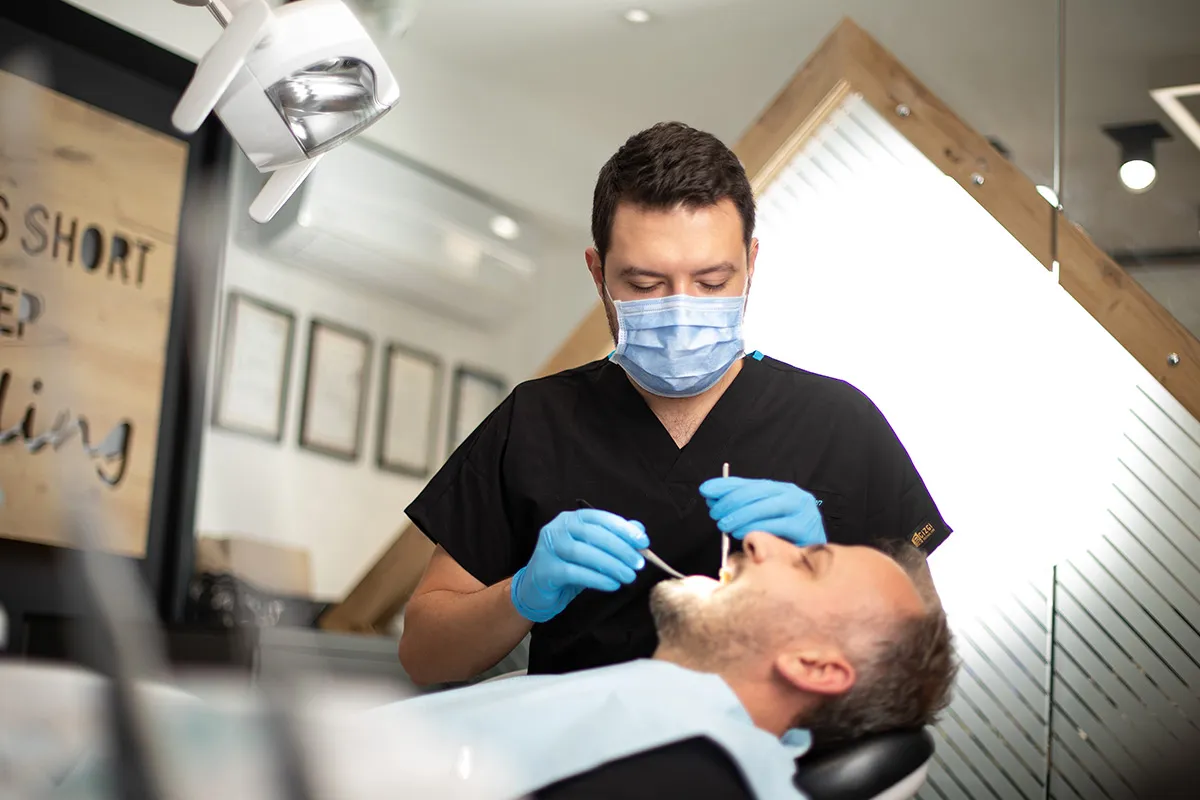
Infection in teeth caused by decay or trauma can turn into a cystic structure at the root tip. In teeth that do not heal despite root canal treatment, the infection at the root tip must be surgically cleaned. Apical resection is the procedure of removing the tip of the root, cleaning out the inflammation and the bone tissue affected by it, and removing the cystic structure that has formed. For an apical resection to be performed, it is important that the root canal treatment of the tooth has been carried out successfully. Apical resection extends the life of the tooth and makes it possible to use it comfortably and without problems for many years.
In which cases can an apical resection be performed?
- If there is a cyst or infection in the tooth roots that persists despite root canal treatment
- If pain in the tooth continues after root canal treatment
- If root canal treatment cannot be performed due to the anatomical structure of the tooth
- If there is a fracture at the root tip of a traumatised tooth
- If a root canal instrument has broken at the root tip during root canal treatment
- If the root canal filling has extended beyond the root tip
- If root canal treatment needs to be performed on a tooth whose root tip has not closed, it can be performed to seal the root tip.
Jaw Cysts
A cyst can be defined as a pathological cavity that contains fluid, semi-fluid or caseous material but is not formed by the accumulation of pus. Cysts that form in the jaws originate from the teeth or from epithelial remnants.
How does a patient notice a cyst?
The patient may notice it through complaints of pain and swelling. However, there is not always pain and swelling. A cyst can silently grow to a large size. It may be discovered by chance during a dental examination.
Must cysts always be removed?
Cysts of dental origin are generally benign, slow-growing lesions. However, if not treated in time, they can grow very large and damage normal anatomical structures such as the sinus, nasal cavity and nerves, or transformation into malignant tumours may occur.
How is cyst surgery performed?
Before the surgery, root canal treatment is performed on the teeth in the area of the cyst. Local anaesthesia is generally sufficient for removing the cyst. General anaesthesia may be used to remove very large cysts. The removed tissue is always sent to pathology for examination.
Is it a painful procedure?
Thanks to the anaesthesia, you will not feel any pain while the cyst is being removed. Afterwards, the healing period is as comfortable as after a tooth extraction. Your doctor will help the post-treatment period go smoothly by prescribing medication such as painkillers, antibiotics and mouthwash.
When is tooth extraction necessary?
- Teeth that are a source of infection in people with endocarditis, rheumatic disease or kidney disease,
- Teeth too badly damaged to be treated,
- Loose (mobile) teeth with extensive bone loss around them,
- Infected teeth on which root canal treatment cannot be performed,
- Infected teeth that do not heal despite root canal treatment and apical resection,
- Impacted or not fully erupted teeth,
- Teeth with a root fracture caused by trauma,
- Roots left behind after breaking during extraction, breaking due to trauma or breaking due to infection,
- Teeth that would affect the healing of a jaw fracture caused by trauma,
- Teeth extracted for orthodontic purposes to gain space, or teeth in a position that cannot be corrected with orthodontic treatment, should be extracted.
Who cannot have a tooth extraction?
- There are no strict rules for tooth extraction and surgical procedures. However, there are certain situations and diseases in which extraction is postponed.
- Acute infection: The tooth is extracted after the infection has been treated.
- Acute maxillary sinusitis: The acute phase is allowed to pass first.
- Teeth located within a tumour: The tooth is not extracted on its own; it is removed together with the tumour.
- Patients who have received radiotherapy to the extraction area: If possible, extractions are performed before radiotherapy. If an extraction is needed after radiotherapy, it is done under medical supervision and with antibiotic prophylaxis. Antibiotics are required until the wound has healed.
- Heart patients: Procedures are carried out after consulting the patient’s physician. In people with prosthetic heart valves, rheumatic heart valve disease or heart valve defects, antibiotic prophylaxis is given before tooth extraction.
- Patients on blood thinners: Before a procedure involving bleeding, the blood thinner needs to be stopped under medical supervision. The physician also decides when to restart the medication after the procedure.
- Patients with hypertension: Because bleeding problems may occur after the extraction, the procedure waits until blood pressure has dropped to a normal level.
- Blood disorders: A doctor must always be consulted before extraction. The missing clotting factor is given to the patient before the extraction, and the doctor checks the patient again afterwards.
- Diabetic patients: In uncontrolled diabetes, there are changes in the blood vessels. These patients have a tendency to bleed, their wounds heal slowly, their body’s resistance is low and they are susceptible to infection.
- Pregnancy: This is not an obstacle to extraction. In first pregnancies and in patients with a history of miscarriage, extraction should, if possible, be performed in the last 3 months of pregnancy.
- People taking medication that regulates the nervous system: They should inform the dentist before the extraction. These medications can reduce the effect of local anaesthesia.
What should you pay attention to after a tooth extraction?
- Do not eat until the effect of the local anaesthesia (the numbness) has worn off.
- Unless your doctor advises otherwise, you can remove the gauze pad after half an hour. Do not replace it with a new one.
- Do not smoke for the first 48 hours. (It has a negative effect on healing.)
- Do not spit.
- Do not rinse your mouth on the first day.
- Do not drink through a straw.
- Do not consume anything very hot or very cold.
- Eat lukewarm, soft foods.
- Do not eat small-grained foods that could get into the extraction site.
- Do not play with the wound area with your tongue.
Are the anaesthetics used in tooth extraction harmful?
The anaesthetic solutions used are not harmful in any way. If you have a known allergy, be sure to inform your doctor before the procedure.
Impacted Teeth
What is an impacted tooth?
It is a tooth that should have erupted but remains beneath the gum or bone.
Which teeth become impacted?
Any tooth can become impacted. The teeth most often impacted are wisdom teeth, canines and premolars.
How are impacted teeth treated?
Impacted teeth can be brought into place with orthodontic treatment. Impacted teeth that cannot be brought into place orthodontically need to be surgically extracted.
Should every impacted tooth be extracted?
Impacted wisdom teeth in particular can put pressure on the teeth in the front. This can cause teeth to shift, bone loss and decay. At times it can cause pain around the head, ears and eyes. In what we call partially impacted teeth, the tooth has not fully erupted and one surface remains covered by gum tissue. Because the area between the tooth and the gum, and between the impacted tooth and the neighbouring tooth, cannot be cleaned well, this area is prone to infection and decay. So as not to compromise the result of orthodontic treatment, impacted wisdom teeth are asked to be extracted before treatment. Teeth sit within a sac inside the jawbone. In impacted teeth, this sac can change over time and lead to the formation of large cysts. The cyst can even grow so large that it weakens the jawbone and causes it to fracture. Depending on their position in the jaw and the available space in the mouth, impacted canines and premolars may be brought into place orthodontically.
What should you pay attention to after an impacted tooth extraction?
- Do not eat until the effect of the local anaesthesia (the numbness) has worn off.
- Unless your doctor advises otherwise, you can remove the gauze pad after half an hour. Do not replace it with a new one.
- Do not smoke for the first 48 hours. (It has a negative effect on healing.)
- Do not spit.
- Do not drink through a straw.
- Do not rinse your mouth on the first day.
- On the first day, you can start brushing your teeth, taking care not to touch the wound area.
- Do not consume anything very hot or very cold.
- Eat lukewarm, soft foods.
- Do not eat small-grained foods that could get into the extraction site.
- Do not play with the wound area with your tongue.
- Take the medication prescribed by your doctor regularly.
Will there be a lot of pain after the extraction? Will my face swell a lot?
There may be pain, swelling and bruising after the extraction. These reactions vary from person to person. To help you through the process comfortably, your doctor will also prescribe various medications. These medications will help prevent pain, swelling and infection. Applying an ice pack for the first 24 hours will also bring considerable relief. It will minimise swelling and bruising.
Frequently asked questions
Does every wisdom tooth need to be removed?
No. A wisdom tooth that has erupted in its proper position, meets the opposing tooth and shows no problem such as decay does not need to be extracted. Teeth that lack space and remain impacted, however, can cause pain, infection and damage to neighbouring teeth.
What is a sinus lift?
When the upper molars are extracted, the sinus floor sinks downward and bone loss occurs. If implants are to be placed in this area, the sinus floor must be raised again to create sufficient bone tissue; this procedure is called a sinus lift.
Is cyst surgery painful?
No pain is felt while the cyst is removed because of the anaesthesia, and recovery is as comfortable as after a tooth extraction. Local anaesthesia is usually sufficient; general anaesthesia may be used for very large cysts. The removed tissue is always sent for pathological examination.
What should I pay attention to after a tooth extraction?
Do not eat until the numbness wears off, remove the gauze pad after half an hour and do not smoke for the first 48 hours. Avoid spitting, rinsing on the first day and drinking through a straw; choose lukewarm, soft foods rather than very hot or cold ones.