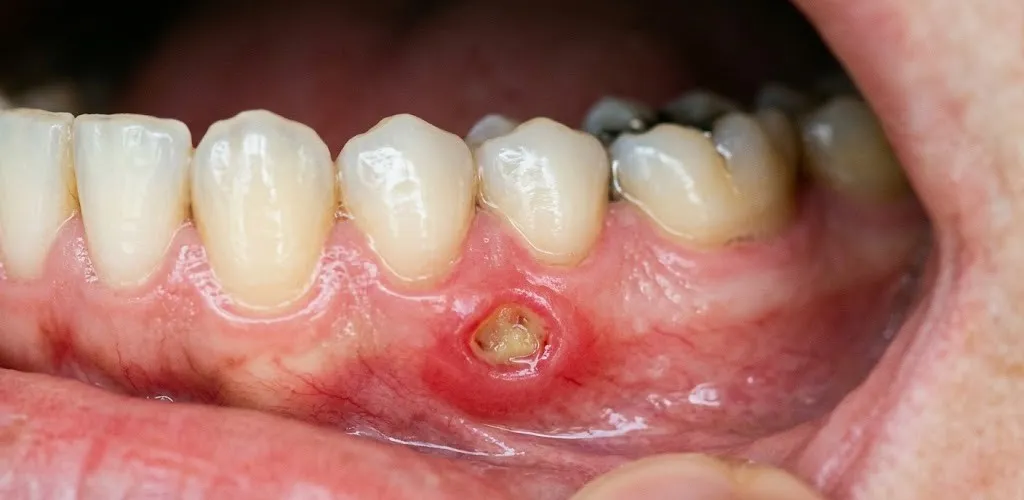
An aphthous ulcer (canker sore) is a small, painful, superficial sore on the inner cheeks, lips, tongue or soft palate; it is white or yellow and surrounded by a red, inflamed halo. It is usually not contagious and tends to heal on its own. Stress, vitamin and mineral deficiencies, local trauma and hormonal changes are the main triggers.
- Minor ulcers heal without scarring within 1–2 weeks.
- Major ulcers can take up to 6 weeks to heal and may leave scars.
- Vitamin B12, iron, folic acid and zinc deficiencies make ulcers more likely.
- Salt water rinses and avoiding acidic and spicy foods bring relief.
- See a dentist if an ulcer lasts longer than 2 weeks or recurs frequently.
Small, painful sores that appear inside the mouth, on the inner cheeks, lips, tongue or soft palate, and significantly reduce daily quality of life are medically called aphthous ulcers. Among the public, as the answer to the question what is a canker sore, they are much more commonly known simply as “canker sores”.
At our clinic in Üsküdar, Istanbul, these sores are among the complaints we hear most often from our patients; they are usually not contagious and tend to heal on their own. However, when they recur and seriously affect quality of life, professional support is essential.
What Is a Canker Sore (Aphthous Ulcer)? What Are the Symptoms?
A canker sore is a small superficial sore on the oral mucosa, white or yellow in color and surrounded by a red, inflamed halo. Although they usually appear singly, they can sometimes appear in clusters.
The most common symptoms are:
-
Sharp pain that worsens when eating, drinking or talking.
-
A burning or stinging sensation at the site of the sore.
-
Noticeable redness around the sore.
-
Mild swelling or tenderness in the mouth.
Why Do Canker Sores Form? Triggering Factors
There is no single cause of canker sores; they usually arise as the body’s response to internal and external factors. According to our clinical observations, the most common triggers are:
-
Stress and Fatigue: The stress of modern city life weakens the immune system and is one of the most important factors triggering canker sores.
-
Nutritional Deficiencies: Deficiencies in vitamin B12, iron, folic acid and zinc in particular reduce the resistance of the oral mucosa.
-
Local Trauma: Brushing too hard, friction from braces or dentures, or accidentally biting the cheek.
-
Hormonal Changes: Hormonal fluctuations, particularly in women during menstruation.
-
Allergic Reactions: Sensitivity to substances such as sodium lauryl sulfate (SLS), found in some toothpastes.
-
Systemic Diseases: Some immune system diseases, such as Behçet’s disease or Crohn’s disease, may be associated with chronic aphthous ulcers.
Types of Aphthous Ulcers
Canker sores are divided into three main groups according to their size and healing time:
-
Minor Ulcers: The most common type. They are usually 1–10 mm in diameter and heal without scarring within 1–2 weeks.
-
Major Ulcers: Rarer, larger and can become deep. Healing can take up to 6 weeks and they may sometimes leave a scar.
-
Herpetiform Ulcers: Numerous pinhead-sized sores that merge and spread. They are very painful.
Treating Canker Sores and Speeding Up Healing
Although most canker sores heal on their own within 1–2 weeks, the following steps can make the process more comfortable:
-
Salt Water Rinse: Helps balance the pH in the mouth and reduces bacteria.
-
Avoid Irritation: Stay away from very hot, very acidic (orange juice, tomatoes, etc.) and very spicy foods.
-
Soft Toothbrush: Use a soft-bristled brush to avoid irritating your gums and cheek tissue.
-
Professional Support: If your sores have not healed for more than 2 weeks, you have difficulty swallowing, or your sores recur very often, you should see a dentist without delay.
Healthy Smiles with OptimaDent
Your oral health is a mirror of your overall health. At our clinic in Üsküdar, Istanbul, we offer comprehensive examination and treatment for everything from mucosal problems such as canker sores to gum health.
Remember: early diagnosis and the right treatment approach are the most important keys to protecting your oral health.
Note: This content is for informational purposes only. For sores in the mouth that do not heal or are severe, be sure to consult a specialist dentist.