Yes, a decayed tooth can be painless. Decay in the enamel, which has no nerve endings, causes no sensation; decay reaching the dentin may only cause mild twinges with sweets or cold. Severe pain usually starts when decay reaches the pulp, the innermost part of the tooth. So the absence of pain does not mean the tooth is healthy.
- The absence of pain can lead to delayed treatment.
- Decay noticed early can be fixed with a simple filling.
- If delayed, root canal treatment or extraction may be needed.
- Dark spots, food getting trapped and bad breath can be signs of decay.
Tooth Structure and the Reason for "Silent" Cavities
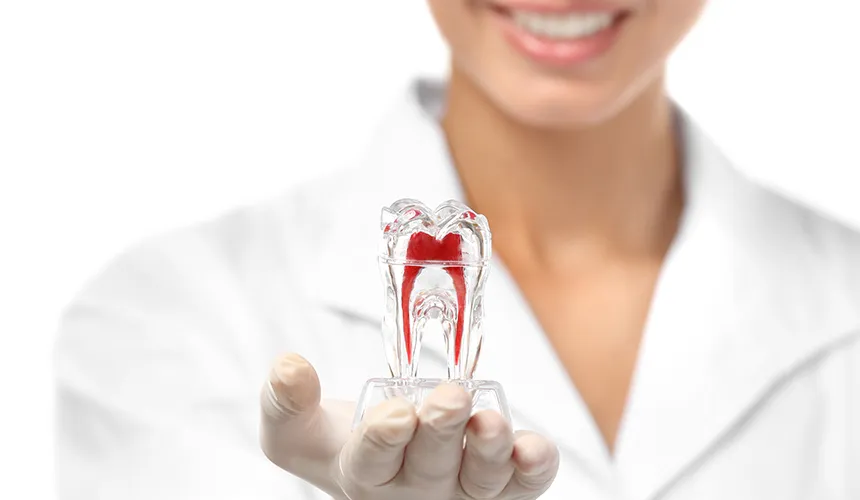
A tooth consists of three main layers, and which layer the decay is in determines whether or not you will feel pain:
-
Enamel: This is the white, very hard outermost part of the tooth. There are no nerve endings in this layer. So while decay is in the enamel, you feel nothing at all.
-
Dentin: This is the softer tissue beneath the enamel. When decay reaches it, it can sometimes cause mild twinges with sweet foods or cold, but it usually does not cause constant pain. Many people neglect this stage, dismissing it as "temporary sensitivity."
-
Pulp (Nerve Bundle): This is the innermost part of the tooth. When decay progresses this far, the famous severe, throbbing toothache that wakes you from sleep begins.
Why Is the Absence of Pain More Dangerous?
Unfortunately, a tooth that does not hurt does not mean everything is fine. In fact, painless cavities often carry greater risks:
-
Delayed Treatment: A patient who feels no pain puts off seeing the dentist. During this time, a tooth that could have been saved with a simple filling continues to decay from the inside.
-
Loss of Money and Time: While a cavity detected early can be fixed with a 15-minute filling, once pain starts, more difficult and costly procedures such as root canal treatment or extraction may be needed.
-
Source of Bacteria: Painless cavities are a constant source of bacteria in the mouth. This leads to gum disease and bad breath.
In Summary
Pain does not indicate the presence of a disease; it indicates that the disease has reached an irreversible or critical point. If you have signs such as visible dark spots on your teeth, food getting trapped between your teeth or bad breath, the best thing to do is see a specialist without waiting for it to hurt.