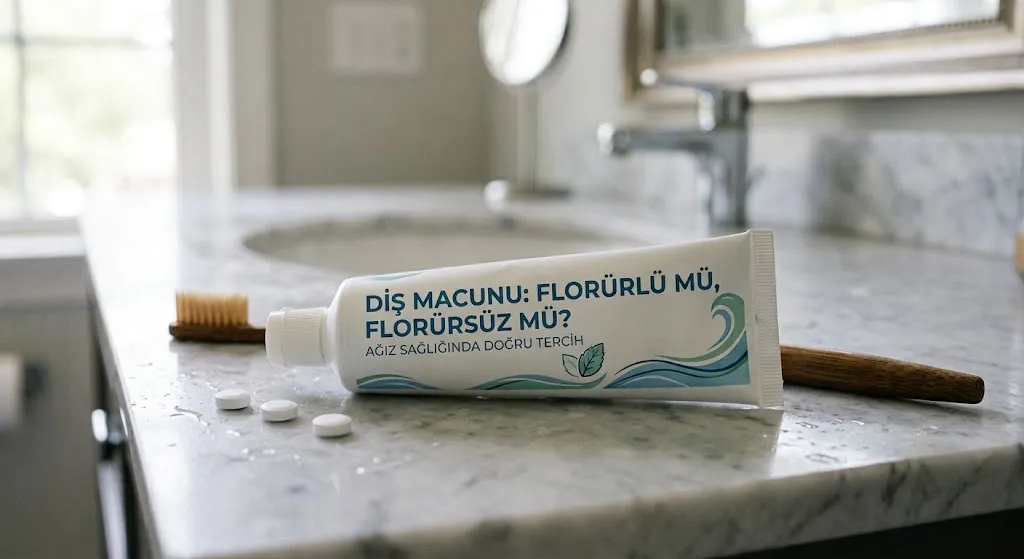
According to the general consensus of dental associations, fluoride toothpaste should be preferred because of its clinically proven ability to prevent tooth decay. Fluoride strengthens the calcium and phosphate structure of enamel, building resistance to acid attacks. Fluoride-free toothpastes are an alternative for people who prefer natural ingredients and for young children who cannot yet spit.
- Fluoride can repair microscopic early-stage cavities.
- Fluoride-free toothpastes clean plaque mechanically but offer limited decay protection.
- For children, a pea-sized amount with an age-appropriate ppm level is recommended.
- With fluoride-free products, look for alternative active ingredients such as hydroxyapatite.
- In many regions, fluoride in tap water alone is not enough.
One of the most common questions in oral and dental care is “Should toothpaste contain fluoride or be fluoride-free?” According to the World Health Organization (WHO) and the Turkish Dental Association (TDB), choosing the right toothpaste is one of the key factors that directly determine your risk of tooth decay.
Fluoride vs Fluoride-Free Toothpaste Compared
| Feature | Fluoride Toothpaste | Fluoride-Free Toothpaste |
| Decay Protection | Remineralizes enamel and offers high protection. | Provides mechanical cleaning; limited in preventing decay. |
| Purpose | Preventing decay and strengthening tooth enamel. | Preference for natural ingredients or fluoride sensitivity. |
| Recommended For | People at high risk of decay, adults and children. | Babies who have not yet learned to spit. |
Benefits of Fluoride Toothpaste
Fluoride strengthens the calcium and phosphate structure of tooth enamel, building resistance to acid attacks. It can also repair microscopic early-stage cavities. Because the natural fluoride level in drinking water varies from province to province and district to district across Türkiye, dentists generally recommend fluoride products.
When Should Fluoride-Free Toothpaste Be Used?
Fluoride-free toothpastes are an alternative for people looking for organic or biological dental care and for children under 3 who cannot yet spit. However, with fluoride-free products, make sure they contain alternative active ingredients (such as hydroxyapatite).
Frequently Asked Questions (FAQ)
1. Should toothpaste contain fluoride or be fluoride-free?
The general consensus of dental associations is that fluoride toothpaste should be preferred because of its clinically proven ability to prevent decay. For people who are not at risk of swallowing it, using fluoride toothpaste is safe and beneficial.
2. Is fluoride toothpaste safe for children?
From the appearance of the first tooth, children are recommended to use a pea-sized amount of fluoride toothpaste with an age-appropriate ppm (parts per million) level. Used in the right amount under parental supervision, it is perfectly safe.
3. Is there enough fluoride in city water in Türkiye?
In many parts of Türkiye, especially large cities such as Istanbul, Ankara and Izmir, the fluoride level in tap water is not enough on its own to prevent tooth decay. That is why topical (externally applied) fluoride support is so important.
4. Do fluoride-free toothpastes prevent cavities?
Fluoride-free toothpastes clean plaque from the tooth surface mechanically, but they are not as effective as fluoride toothpastes at making enamel chemically resistant to acids.