Clear aligner treatment usually takes 3-6 months in simple cases, 6-12 months in moderate cases and 12-24 months in complex cases involving bite problems or severe alignment issues. The duration depends on the degree of crowding and the level of correction targeted. The exact timeline becomes clear with the plan your orthodontist prepares during digital scanning and simulation.
- Patient compliance is the most important factor in determining duration.
- Aligners should be worn at least 20-22 hours a day.
- You usually switch to a new aligner every 1-2 weeks.
- A retainer or fixed retainer should be used after treatment.
- Do not clean aligners with boiling water; keep them in their case.
Today, many people who want an aesthetic and comfortable smile choose clear aligner treatment as an alternative to traditional braces. "How long does clear aligner treatment take?" is one of the most common questions among patients considering treatment. In this article, you will find the factors that affect treatment time, how the process works and all the details you may be wondering about.
How Long Does Clear Aligner Treatment Take?
The duration of orthodontic treatment with clear aligners varies from person to person depending on the amount of crowding in the teeth and the level of correction targeted. As a general framework:
-
Simple Cases: Cases with mild crowding or gaps that need to be closed are usually completed in 3 to 6 months.
-
Moderate Cases: In moderate cases with more noticeable alignment problems, treatment time can range from 6 to 12 months.
-
Complex Cases: In complex cases involving bite problems or severe tooth alignment issues, treatment can take 12 to 24 months.
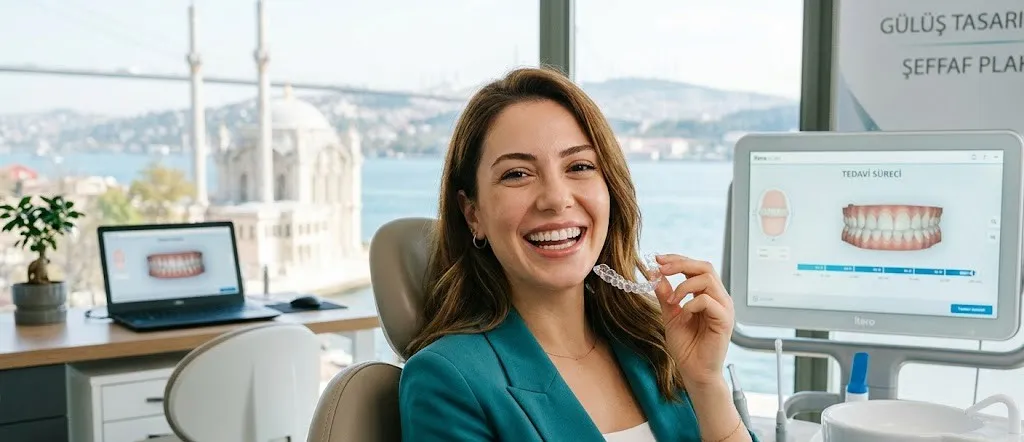
Exactly how long your treatment will take becomes clear with the plan prepared by your orthodontist during the digital scanning and simulation stage.
Key Factors Affecting Treatment Time
The most important factor determining the course of clear aligner treatment is the patient's compliance.
-
Daily Wear Time: It is critical to wear the aligners at least 20-22 hours a day. Keeping the aligners in your mouth at all times except when eating and cleaning your teeth ensures treatment finishes within the planned time.
-
Regular Aligner Changes: Switching to a new aligner at the intervals recommended by your dentist (usually every 1-2 weeks) keeps tooth movement continuous.
-
Oral Hygiene: Maintaining oral health and preventing gum problems is necessary for treatment to progress without interruption.
-
Follow-up Appointments: Attending check-ups at the scheduled intervals allows possible issues to be noticed and corrected early.
Frequently Asked Questions About Clear Aligner Treatment
Will clear aligners affect my speech?
Your tongue may need a short adjustment period in the first few days of treatment; however, because the aligners are thin and custom-made, you will soon return to your natural way of speaking.
When should I remove my aligners?
It is recommended that you remove your aligners when eating, drinking hot beverages and brushing your teeth. This does not harm treatment success; on the contrary, it keeps the process hygienic.
Do smoking, tea and coffee stain aligners?
Clear aligners are made of thermoplastic material. Heavy consumption of tea, coffee or cigarettes can discolor the aligners over time. However, because aligners are replaced at regular intervals (for example, every 15 days), this does not become a permanent problem.
Is the treatment painful?
It is normal to feel slight pressure on your teeth when you first start wearing aligners or switch to a new one. This is a sign that your teeth are moving and the treatment is working; it usually goes away on its own within a few days.
What You Should Know: Tips for Success
-
Storage Case: Always keep your aligners in their case when you take them out of your mouth. Wrapping them in a napkin is the most common mistake that leads to aligners being thrown away by accident.
-
Be Careful with Hot Water: Do not use boiling or very hot water when cleaning your aligners; this can warp their shape. Lukewarm water and a soft toothbrush are enough for cleaning.
-
Retention (Retainer) Phase: After treatment ends, wearing retainers or fixed retainers for as long as your dentist recommends, so that your teeth hold their new positions, is vital for making the result last.
Thanks to modern dentistry, clear aligner treatment is an aesthetic and comfortable process in which you can see the results in advance through digital planning. To find out how long your own treatment will take and see your digital smile design, the best step is to consult an orthodontic specialist.
Note: This information is for general informational purposes. Treatment methods may vary according to individual needs. You should talk to your dentist about the treatment plan that suits you best.