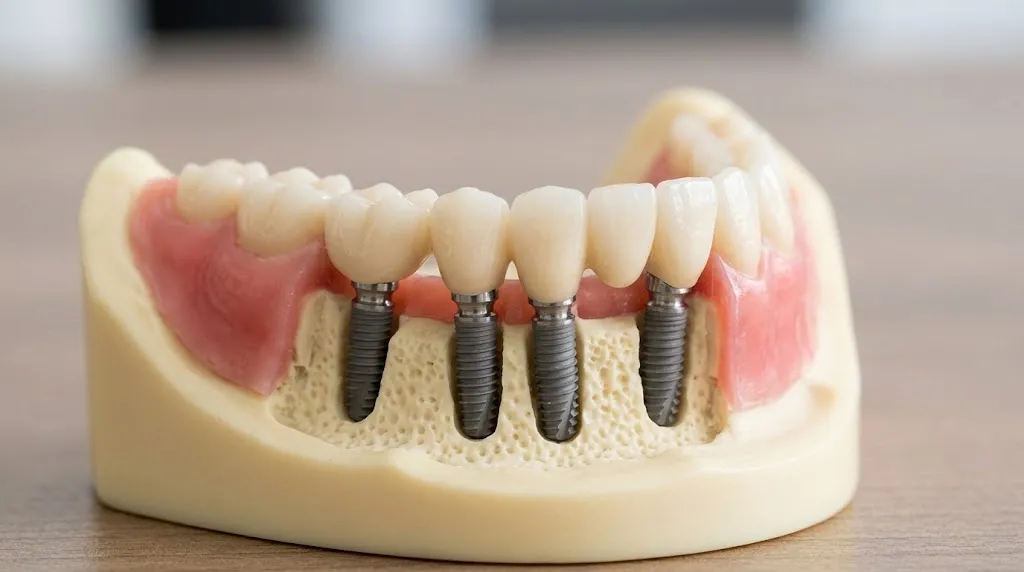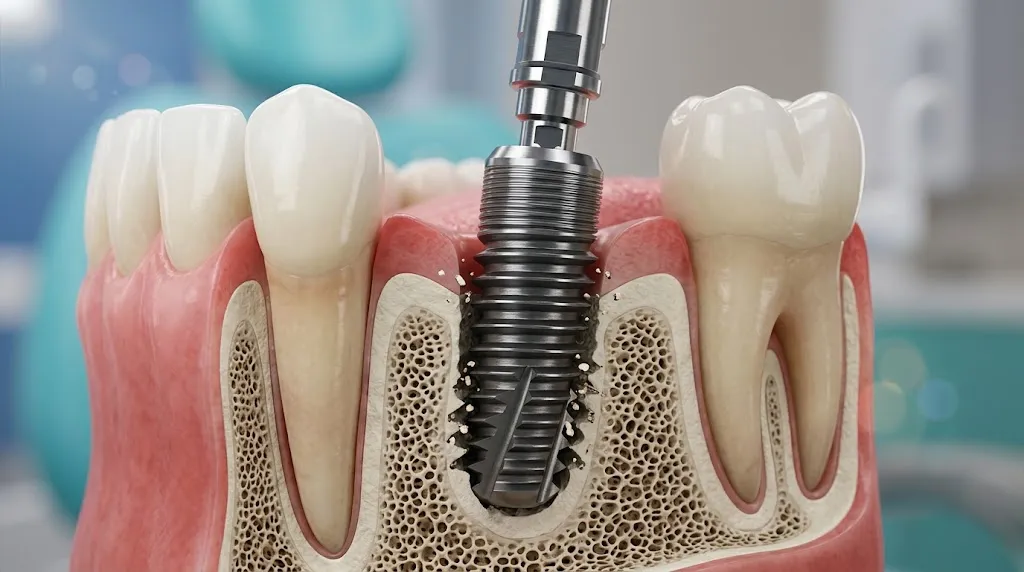

Because implant placement is performed under local anesthesia, no pain is felt during the operation; only slight pressure and the vibration of instruments may be noticed. After the numbness wears off, there may be a mild ache similar to a tooth extraction, which is usually controlled with simple painkillers. Sedation or general anesthesia can be used for severe dental fear.
- The jawbone does not contain dense pain receptors.
- Mild swelling in the first 24–48 hours goes away with ice compresses.
- Most patients can return to daily life the next day.
- Flapless (stitch-free) implants and digital planning reduce tissue trauma.
- Postponing treatment may lead to the need for bone grafting later.
1. What Is Felt During the Operation?
Implant placement is performed under local anesthesia. Because the area is completely numbed, it is medically impossible to feel any pain or aching during the procedure. You may only feel slight pressure and the vibration of the instruments during the operation. If you have a very severe fear of the dentist (phobia), the procedure can also be carried out with sedation or general anesthesia.
2. The Post-Operative Period
After the numbness wears off, a mild ache may be felt, just as after a standard tooth extraction. This is usually easily controlled with simple painkillers.
-
Pain Receptors: An interesting fact: jawbone tissue does not contain dense pain receptors the way tooth enamel or the tooth nerve does. For this reason, procedures inside the bone cause much less discomfort than pain from the tooth itself.
-
Recovery Time: Mild swelling that may occur in the first 24–48 hours goes away quickly with ice compresses and the medication your dentist recommends. Most patients can return to their daily work the next day.
3. Modern Techniques That Increase Comfort
Advancing technology has made implant operations even easier:
-
Flapless (Stitch-Free) Implants: With this method, performed without cutting the gum, there is almost no pain or swelling after the operation.
-
Digital Planning: Because the position of the implant is determined digitally in advance, the operation time is shorter and tissue trauma is reduced.
In Summary
Implant treatment is a routine and safe method for replacing missing teeth rather than a "frightening" surgical procedure. Postponing treatment because of worries about pain can make the process harder, as it may lead to more demanding bone grafting procedures later.