A Maryland bridge (winged bridge) is a minimally invasive prosthetic method that replaces a missing tooth without cutting down the neighboring teeth. The artificial tooth is held by metal or porcelain wings bonded to the tongue-side surfaces of the neighboring teeth. It is usually preferred for a single missing front tooth and is mostly completed in two sessions.
- Advantages: no tooth reduction or surgery required, and it is reversible.
- Disadvantage: it is not as durable as a conventional bridge or an implant.
- The wings may come loose with hard foods; the dentist can re-bond them.
- The neighboring teeth need to be healthy and free of fillings.
- It may not be recommended for people who clench their teeth or have a deep bite.
What Is a Maryland Bridge (Winged Bridge)?
A Maryland bridge is a minimally invasive prosthetic method that replaces a missing tooth without needing to cut down the neighboring teeth. While the adjacent teeth are reduced all the way around in conventional bridges, in a Maryland bridge the artificial tooth (pontic) is held in place by metal or porcelain "wings" bonded to the back surfaces (tongue side) of the neighboring teeth.
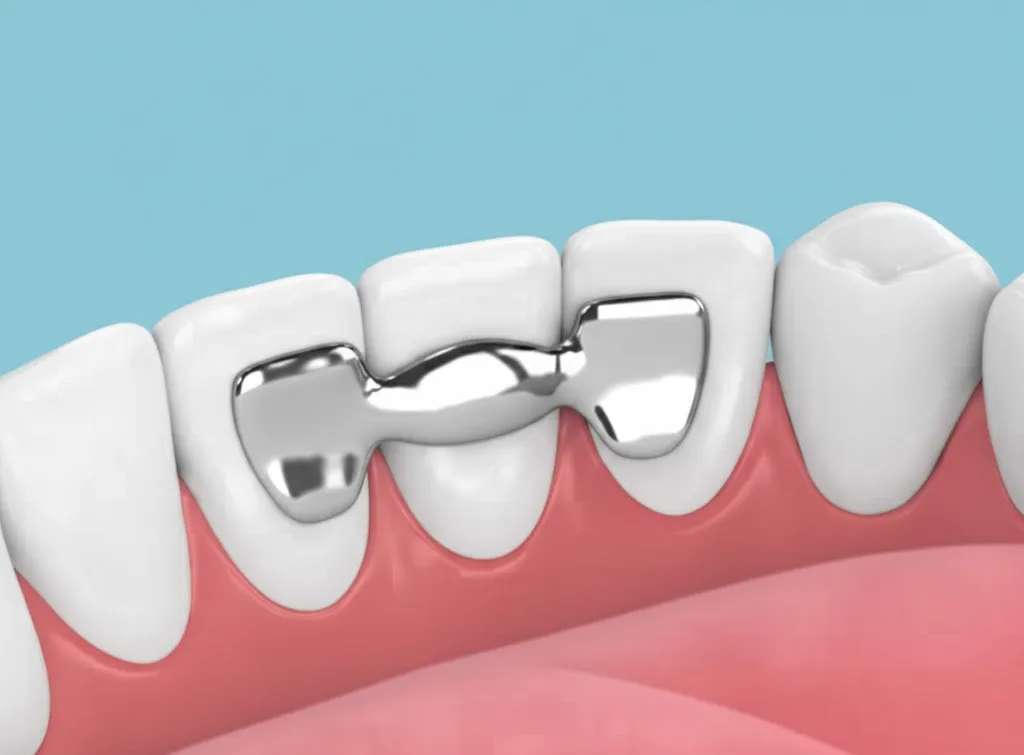
Usually preferred for a single missing tooth in the front of the mouth, this method is one of the best examples of "preventive dentistry" because it preserves tooth tissue to the greatest possible extent.
In this guide, we will cover in detail all the questions people wonder about, such as "What is a Maryland bridge?", "Who is it suitable for?" and "What are its advantages?".
What Are the Advantages of a Maryland Bridge?
There are many reasons why Maryland bridge treatment is popular:
-
No Tooth Reduction Required: Its biggest advantage is that the enamel of the neighboring teeth is left untouched. Your teeth stay in their original form.
-
No Surgery: Unlike implant treatment, it does not require drilling into bone, stitches or a healing period.
-
Economical: It is more affordable than implant treatment and conventional porcelain bridges.
-
Quick and Practical: It is usually completed in two sessions (impressions and bonding).
-
Reversible: If you decide to have an implant in the future, the Maryland bridge can be easily removed and the teeth beneath it will not have been damaged.
-
Natural Appearance: Options with porcelain wings and zirconia frameworks in particular blend perfectly with natural tooth aesthetics.
Disadvantages and Limitations of a Maryland Bridge
As with every treatment method, the Maryland bridge also has aspects to keep in mind:
-
Durability: It is not as strong as conventional bridges or implants. For this reason, it may not withstand the high chewing pressure on the back teeth.
-
Risk of Coming Loose: Because it is held in place by adhesive, the wings may come loose when hard foods are eaten (however, the dentist can bond them again).
-
Color Show-Through: With metal wings, a slight gray tint may be seen in thin teeth under light (today this problem has been overcome with porcelain wings).
Who Is a Maryland Bridge Suitable For?
This treatment method may not be ideal for every case. A Maryland bridge is preferred in the following situations:
-
For a single missing tooth in the front of the mouth.
-
For patients who do not want implant surgery or whose bone structure is insufficient for an implant.
-
For young patients (as a temporary/permanent solution until bone development is complete).
-
When the neighboring teeth are healthy, free of fillings and sound.
Important Note: A Maryland bridge may not be recommended for people with a teeth-clenching (bruxism) problem or a very deep bite.
How Does the Treatment Process Work?
Having a Maryland bridge made is quite comfortable:
-
Examination and Planning: Your dentist checks your bite and the health of the neighboring teeth.
-
Impressions: Impressions of the mouth are taken with digital or conventional methods with almost no reduction of the teeth.
-
Laboratory Stage: The dental technician prepares the wings that fit the neighboring teeth and the artificial tooth.
-
Bonding (Cementation): Using special resin-based adhesives (resin cement), the bridge is fixed to the back surfaces of the teeth.
Conclusion
A Maryland bridge is an aesthetic, fast and conservative alternative for patients who do not want their teeth cut down and are wary of surgery. With proper planning and good oral hygiene, it can be used safely for 5–10 years (or longer).
Remember to get an expert opinion to protect your smile and determine the most suitable treatment method for you.
For all your questions and appointment requests, you can contact us.