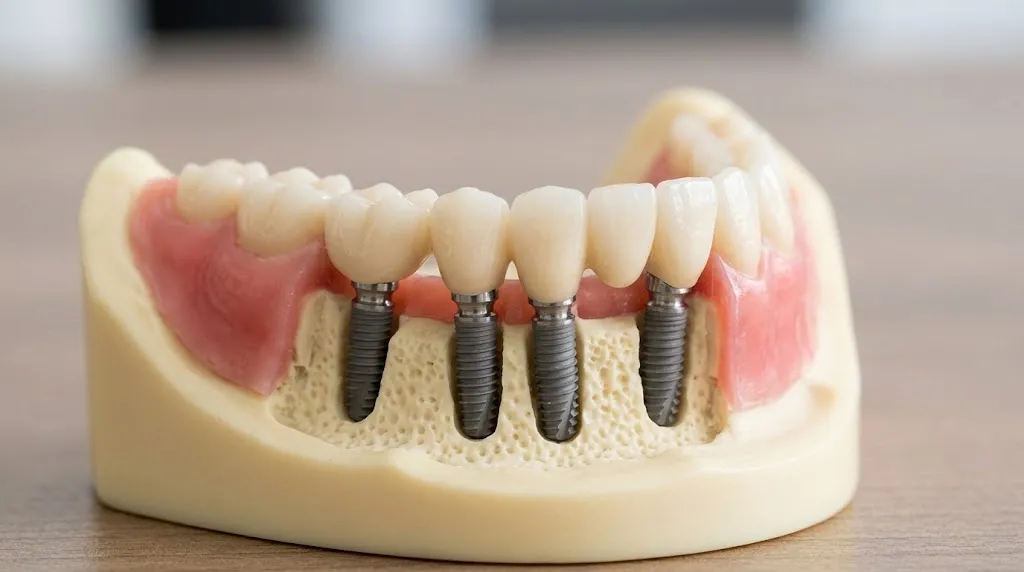
Missing teeth can be replaced with dental implants, where a crown sits on a titanium screw; fixed bridges, supported by reduced neighboring teeth; or partial or full removable dentures. The choice depends on general health, jawbone volume and budget. Untreated gaps impair chewing, cause teeth to shift and lead to bone loss.
- Implants leave neighboring teeth untouched and prevent bone loss.
- A bridge is usually completed within 1–2 weeks.
- Implants typically need 2–4 months to fuse with the bone.
- Planning is done with a panoramic X-ray or 3D CT scan.
- Braces or clear aligner treatment can be done while teeth are missing.
Options for Replacing Missing Teeth: Oral and dental health is one of the most important parts of overall health and quality of life. However, tooth loss can sometimes occur due to genetic factors, advanced gum disease, large cavities or accidents. Losing even a single tooth sets off a chain reaction that disrupts the entire balance of the mouth.
What Harm Do Missing Teeth Cause?
Many people tend to neglect missing teeth, especially at the back of the mouth, because they are not visible and do not seem like an aesthetic concern. However, the harm caused by missing teeth is not limited to aesthetics; it leads to much more serious functional and structural problems:
-
Impaired Chewing Function: Food cannot be ground down properly. This increases the load on the digestive system and paves the way for stomach problems (gastritis, reflux, etc.).
-
Shifting Teeth: Over time, the teeth next to and opposite the gap start to tilt into the space or over-erupt. This causes bite problems (malocclusion).
-
Jawbone Loss (Resorption): When the natural pressure that the tooth root places on the jawbone disappears, the bone tissue in that area loses its function and gradually begins to shrink.
-
Aesthetic and Speech Problems: Especially with missing front teeth, sounds such as “s”, “f” and “v” become harder to pronounce. As lip and cheek support collapses, the face takes on an older appearance.
Does a Missing Tooth Affect Jaw Structure?
This is one of the most frequently asked questions: Does a missing tooth affect jaw structure? > Absolutely, yes. Each tooth in the mouth is like a piece of a jigsaw puzzle. When a tooth is lost, the neighboring teeth tilt towards the gap. This tilting causes spaces to open between teeth and new areas of decay to form. More importantly, because the chewing load falls on one side or on certain teeth, pain, clicking and locking may develop in the jaw joint known as the Temporomandibular Joint (TMJ). As bone loss progresses, the symmetry of the jawline and facial aesthetics are also permanently affected.
What Can Replace a Missing Tooth? What Can Be Done for Missing Teeth?
Thanks to advances in technology and biomaterials, there are now several highly comfortable answers to the question what can replace a missing tooth. The answer to what can be done for missing teeth lies in three main methods, planned according to the patient's general health, the amount of bone in the mouth and their budget:
1. Dental Implant Treatment (The Most Natural Solution)
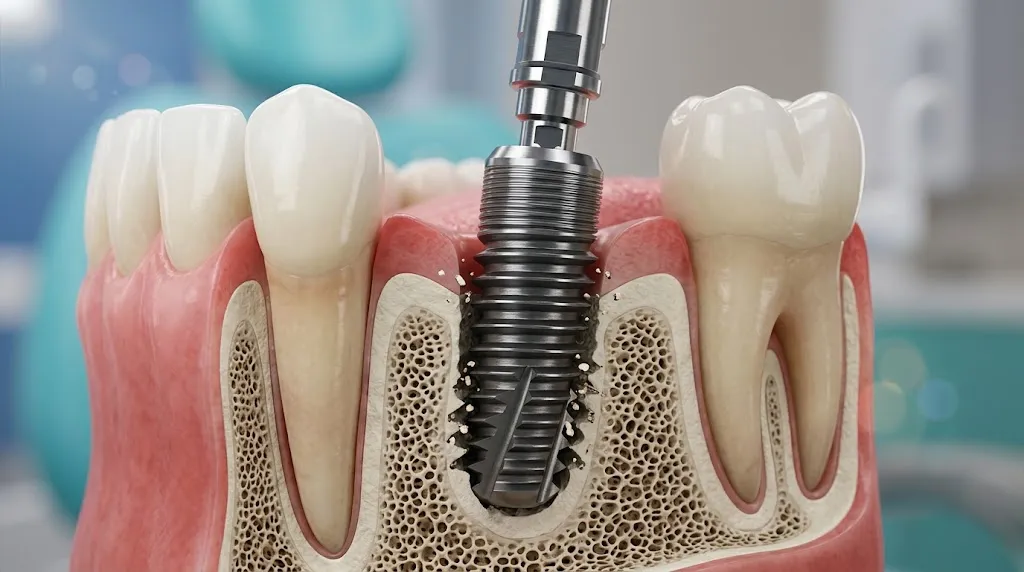
Considered the gold standard of modern dentistry, implants are screws made of titanium that act as artificial tooth roots. Porcelain or zirconia crowns are placed on top of these screws once they are positioned in the jawbone.
-
Advantage: Neighboring teeth are not touched at all. Jawbone loss is prevented. It offers the most natural chewing feel.
2. Fixed Bridges (The Traditional Solution)
When implant treatment is not suitable or not preferred, the healthy teeth on either side of the gap are reduced slightly and used as supports (abutments) for a bridge.
-
Advantage: It delivers fast results (usually completed within 1–2 weeks). It is very successful aesthetically.
3. Removable Dentures
These are dentures that patients can put in and take out themselves, used when many teeth are missing or when there are no teeth at all. Partial dentures and full (complete) dentures fall into this group. With advancing technology, they have become much more comfortable thanks to snap-on (precision attachment) systems.
How Are Missing Teeth Replaced? Treatment Processes
So, how are missing teeth replaced in the clinic? The treatment process varies depending on the method you choose:
[Detailed Examination & X-ray/CT Scan] │ ├──> Implant Path: Screw Placement ──> Osseointegration (2–4 Months) ──> Restoration (Crown) │ └──> Bridge Path: Preparing Neighboring Teeth ──> Impressions ──> Laboratory & Cementation-
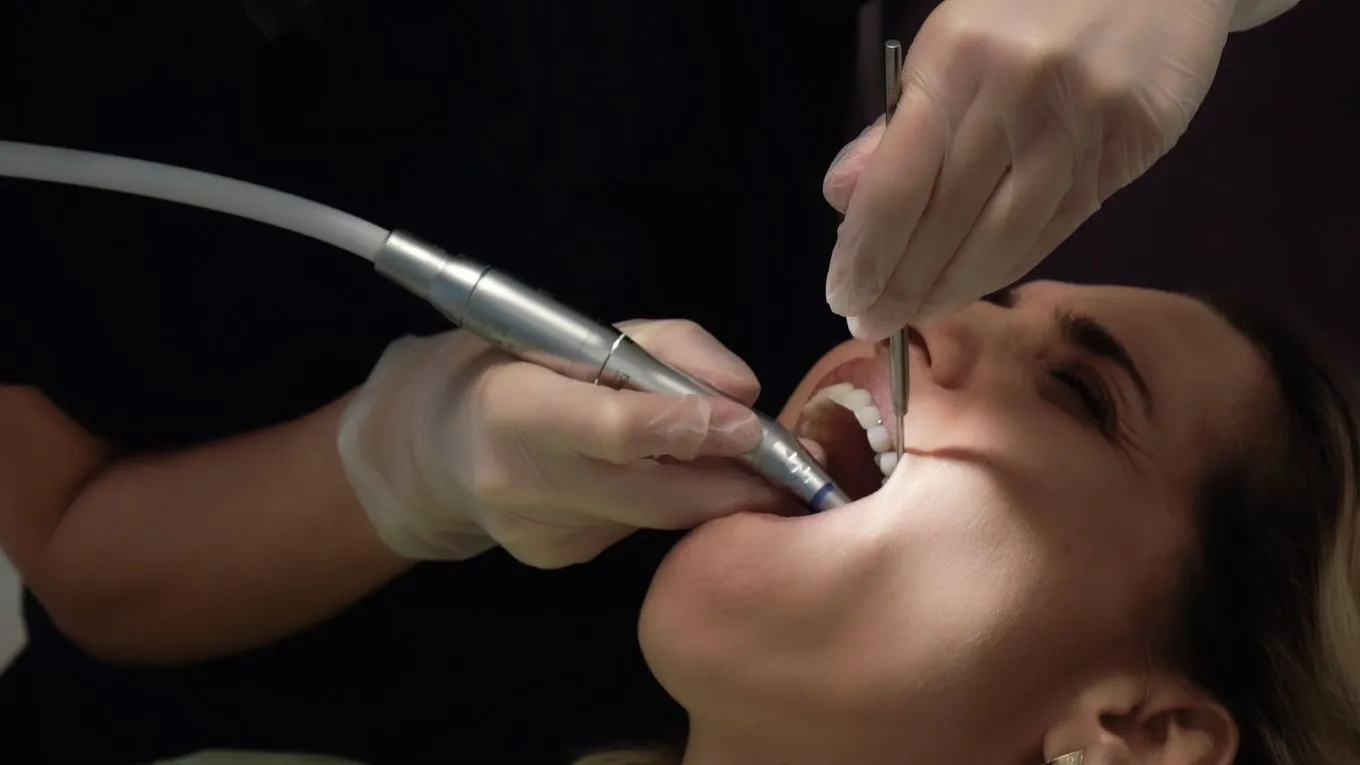
Examination and Planning: First, a panoramic X-ray or 3D jaw CT scan is taken to analyze bone density.
-
Surgery/Preparation Stage: If an implant is planned, the screw is placed in the bone under local anesthesia in sterile conditions. If a bridge is planned, the supporting teeth are shaped and a digital or conventional impression is taken.
-
Healing and Adaptation: An average of 2 to 4 months is allowed for the implant to fuse with the bone (osseointegration). Temporary teeth can be made for the patient during this time.
-
Fitting the Permanent Prosthesis: In the final stage, the aesthetic zirconia or porcelain teeth are fitted in the mouth and the treatment is successfully completed.
Frequently Asked Questions About Missing Teeth Treatment
Can braces be fitted while teeth are missing?
Yes, braces (orthodontic treatment) or clear aligner treatment can be done while teeth are missing. In fact, braces are often applied first to bring neighboring teeth that have tilted due to the gap back to their upright position. Once the correct position is achieved, an implant is placed in the ideal space that has been created. In some cases, orthodontic treatment can close existing gaps completely, eliminating the need for an implant.
Is implant treatment painful?
Because implant surgery is performed under local anesthesia, no pain is felt during the procedure. Afterwards, the process is comfortable, with no more than mild aching similar to a normal tooth extraction, which can be controlled with simple painkillers recommended by your dentist.
Can a single missing tooth affect the whole mouth?
Yes, teeth support each other and stand in a line. When a single tooth is lost, the balance of the neighboring teeth is disturbed, the opposing tooth over-erupts into the gap, and over time this negatively affects the bite (chewing) mechanics of the whole mouth.
Should I get a bridge or an implant?
If your jawbone structure is suitable, implant treatment is always the first and healthiest option, as it leaves your healthy neighboring teeth untouched and prevents bone loss. However, if there is insufficient bone or your general health is not suitable for surgery, bridges are a very good alternative.
Conclusion: Don't Put Off Your Smile
Replacing missing teeth does more than resolve an aesthetic concern; it protects your jaw joint, eases the load on your digestive system and helps prevent facial aging. To benefit from modern dentistry for missing teeth and find out the most suitable treatment plan for you, it is very important to have an examination with a specialist dentist without delay. Your dental health is a mirror of your overall quality of life.