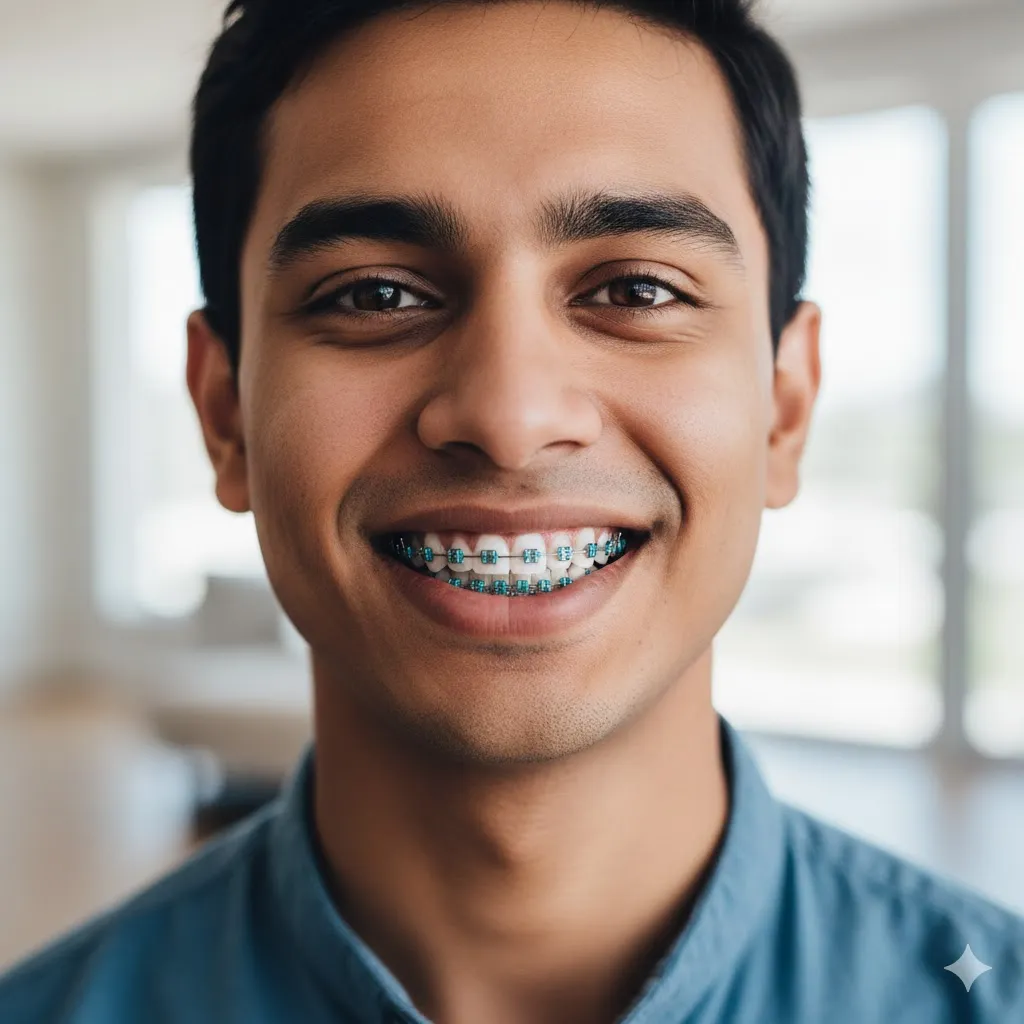
Overjet is when the upper front teeth sit too far forward of the lower front teeth horizontally; overbite is when the upper teeth cover the lower teeth too much vertically. The key difference is direction: overjet is measured as a horizontal distance, overbite as a percentage of overlap. Both bite problems can be corrected with orthodontic treatment.
- If untreated, tooth wear, speech difficulties and jaw joint problems can occur.
- Treatment uses clear aligners, brackets, jaw appliances or orthognathic surgery.
- Overjet does not correct itself; professional treatment is needed.
- Treatment while the jaw is still developing (ages 7-12) usually gives the fastest results.
- Treatment is also possible in adults.
What Is Overjet?
Overjet, commonly known as "buck teeth" or "protruding teeth," is when the upper front teeth sit too far forward of the lower front teeth on the horizontal plane.
-
Characteristic: It is measured horizontally.
-
Appearance: The upper teeth protrude forward with a noticeable gap in front of the lower teeth.
-
Causes: Genetic factors, a thumb-sucking habit or a lower jaw that sits too far back.
What Is Overbite?
Overbite is when the upper teeth cover the lower teeth more than they should on the vertical plane (from top to bottom). In a normal bite, the upper teeth cover about 20-30% of the lower teeth, while with an overbite this percentage is much higher.
-
Characteristic: It is measured vertically.
-
Appearance: The lower teeth are sometimes not visible at all, or the upper teeth may touch the lower gums.
-
Causes: Jawbone development disorders or incorrect positioning of the teeth.
Differences Between Overjet and Overbite
Although many people confuse these two terms, the key difference is direction:
| Feature | Overjet | Overbite |
| Direction | Horizontal (Forward-Backward) | Vertical (Up-Down) |
| Sign | Upper teeth protruding forward | Upper teeth completely covering the lower teeth |
| Measurement | Horizontal distance in millimeters | Percentage of overlap (%) |
Why Should These Problems Be Treated?
If left untreated, both overjet and overbite can lead to serious health problems:
-
Tooth Wear: An incorrect bite causes the teeth to rub against each other and wear down prematurely.
-
Speech Difficulties: Pronouncing sounds such as "S" and "F" can be difficult.
-
Jaw Joint Problems: Joint pain and fatigue in the chewing muscles develop.
-
Risk of Trauma: Especially with overjet, the protruding front teeth are more vulnerable to impact.
Treatment Options
Modern orthodontics offers effective solutions for both problems:
-
Clear Aligners (Invisalign): An aesthetic solution for mild and moderate cases.
-
Metal or Ceramic Brackets: The most common method for changing the position of the teeth and jaw.
-
Jaw Appliances: Used especially in growing children to guide jaw growth.
-
Orthognathic Surgery: Surgical treatment may be needed in adults with severe skeletal jaw disorders.
Frequently Asked Questions
Does overjet correct itself? No, because it involves the bone and tooth structure, professional orthodontic treatment is required.
What is the best age for treatment? Treating while the jaw is still developing (ages 7-12) usually gives the fastest results, but treatment is also possible in adults.
We hope we have answered your questions about what overjet and overbite are. For questions and appointments, you can contact us.