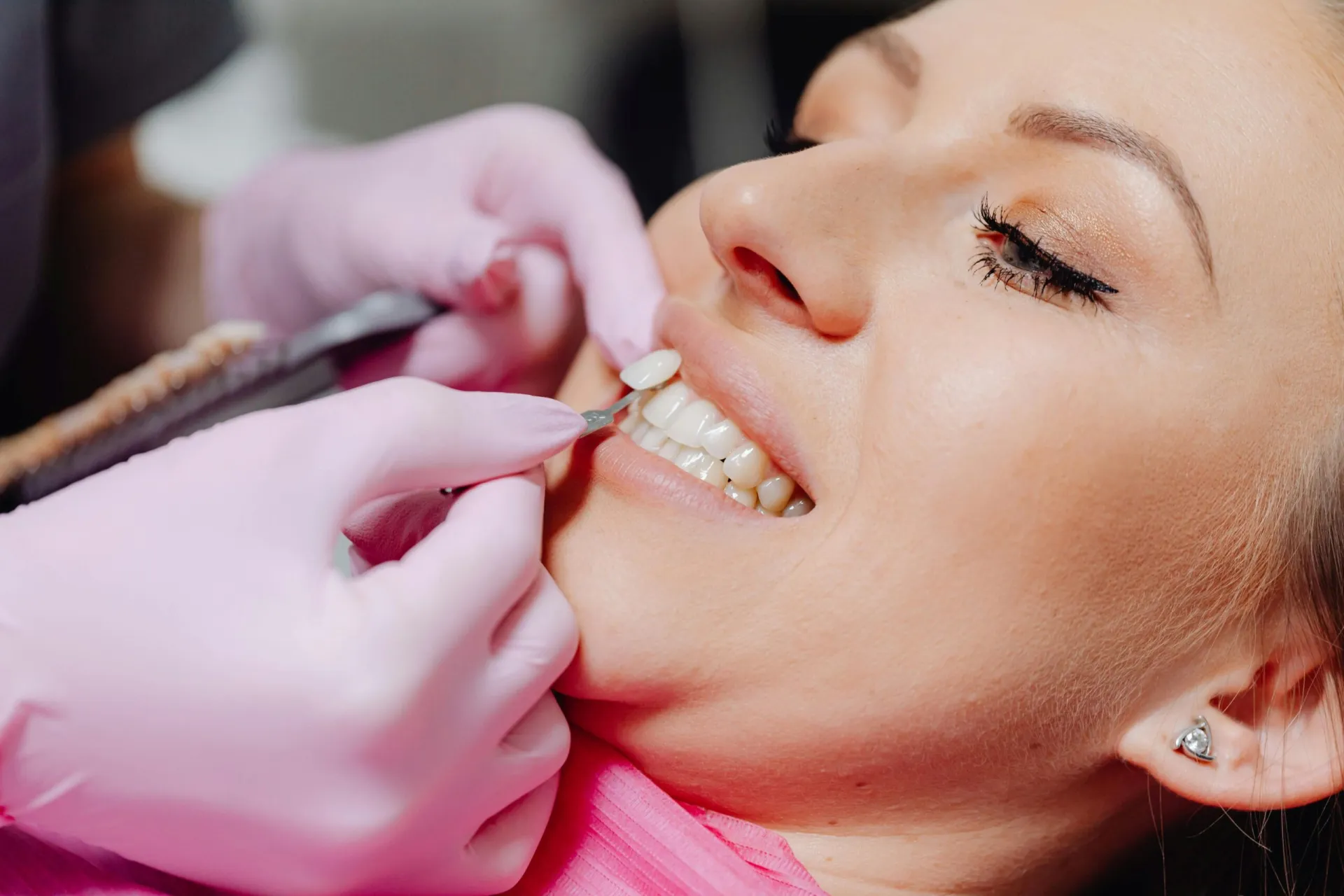
Porcelain veneers (laminate veneers) are thin porcelain shells, 0.3–0.7 mm thick, bonded only to the front surface of the teeth to correct aesthetic problems. They are made in an average of 2–3 sessions through examination and digital smile design, a mock-up trial, minimal reduction of the front surface and impressions, CAD/CAM production in the laboratory and permanent bonding.
- Thanks to their translucency, they mimic natural tooth enamel.
- Temporary veneers are fitted on the same day as the impressions.
- They may not be recommended for severe clenching or major tooth loss.
- With good care, they can keep their looks for 10–15 years.
- Cost depends on the number of teeth, material and extra procedures, set after examination.
When it comes to smile design and aesthetic dentistry, one treatment that comes first to mind, growing more popular every day thanks to its natural look and its preservation of tooth structure with minimal tissue loss, is porcelain veneers. So what are porcelain veneers and how are they done?
Today, with social media, digitalization and aesthetic awareness on the rise, a flawless smile is no longer a luxury but an accessible standard. What exactly is this much-discussed aesthetic wonder of recent years, how does the process work and what is the situation with veneer prices in 2026?
In this comprehensive guide, we cover this method, commonly known as leaf porcelain and in the dental literature as veneers (laminate veneers), from start to finish with all its details and treatment stages.
What Are Porcelain Veneers (Leaf Porcelain)?
Porcelain veneers are very thin porcelain layers bonded only to the front surfaces of the teeth to correct aesthetically concerning dental problems. They are often called leaf porcelain because they are about as thin as a contact lens or a leaf (between 0.3 and 0.7 mm).
The English word veneer generally means “covering” or “facing”. These special materials used in aesthetic dentistry imitate natural tooth enamel exactly thanks to their translucency. Unlike traditional crowns, which require reducing the whole tooth, veneers preserve the integrity of the tooth.
Why Are They So Popular in Smile Aesthetics?
In modern dentistry, porcelain veneers are usually the first choice of dentists and patients for a “Hollywood Smile” or personalized smile design. The main reasons are:
-
Minimal Reduction (Tissue-Friendly): Instead of cutting all around the tooth, only a very slight roughening is done on the front surface (sometimes with no cutting at all – No-Prep Veneers).
-
Natural Look and Translucency: Leaf porcelain reflects and transmits light just like natural tooth enamel. As a result, it offers a lively, healthy shine rather than an “artificial” whiteness.
-
No Discoloration: Unlike natural teeth, which yellow due to external factors such as tea, coffee and cigarettes, high-quality ceramic veneer surfaces are smooth and resist staining.
-
Fast Results: In an average of 2 to 3 sessions, in other words in about a week, you can have a completely new smile.
-
Durability: Chemically bonded to the tooth with special adhesive systems, veneers practically become one with the tooth and show high resistance to chewing forces.
How Are Porcelain Veneers Done? The Treatment Process
Veneer treatment is a multi-stage process that requires meticulous planning and digital integration. The treatment steps generally proceed as follows:
1. Initial Examination and Digital Smile Design:Session 1.Your dentist examines the health of your teeth and gums. If there are existing cavities or gum problems, these are treated first. Then a 3D model of your mouth is created using high-resolution photographs and intraoral digital scanners. The smile design that best suits your facial features is planned on the computer.
2. Mock-Up (Smile Trial):Planning Stage.Before your teeth are touched at all, a temporary model (mock-up) prepared in the laboratory is placed in your mouth. This lets you see live in the mirror how your teeth will look at the end of the treatment and decide on length and shape changes together with your dentist.
3. Minimal Tooth Preparation and Impressions:Session 2.Once the plan is approved, a very light reduction of 0.3–0.5 mm is made on the front surface of the teeth. After this, precise digital impressions are taken and sent to the laboratory where the veneers will be produced. For the patient's comfort and to prevent sensitivity, temporary veneers are fitted on the same day.
4. Laboratory Production:3–5 Days.In the laboratory, your custom veneers are milled with millimetric precision from E-max or feldspathic porcelain blocks using CAD/CAM (computer-aided design and manufacturing) technology, and then artistically colored by the technician.
5. Permanent Bonding (Cementation):Final Session.The finished veneers are tried in the mouth. If the color, shape and bite are a perfect fit, the temporary teeth are removed. The veneers are permanently bonded to the tooth surface using special adhesive agents and light sources. Your new smile is now ready!
How Much Do Porcelain Veneers Cost in 2026?
Cost is one of the things patients who want cosmetic dental treatment are most curious about. Veneer prices in 2026 are shaped by the minimum fee schedule set by the Turkish Dental Association (TDB), the digital technologies used at the clinic and the quality of the porcelain material.
Note: The total cost varies depending on the number of teeth treated (usually 6 to 10 teeth are chosen to cover the visible smile line), digital smile design fees and additional surgical procedures such as gum contouring (gingivectomy). The exact price can only be determined after an examination by a specialist dentist. To book an examination appointment at our clinic, you can contact us.
Frequently Asked Questions (FAQ)
Will I feel pain during the veneer procedure?
No. Because the procedure usually involves only the outermost enamel layer of the tooth, it is painless. Local anesthesia is used to make the process completely comfortable.
Do veneers fall off over time?
When the correct clinical indication is made and modern adhesive bonding technologies are used, the risk of veneers coming off is almost nonexistent. They bond chemically with the tooth.
Who cannot have porcelain veneers?
For people with severe teeth clenching (bruxism), parafunctional habits such as nail biting, or major tissue loss/decay in the front teeth, full ceramic crowns or night guard treatment first are recommended instead of veneers.
How long do veneers last?
With good oral care (regular brushing and flossing) and routine dental check-ups every 6 months, porcelain veneers can be used safely for 10 to 15 years while keeping their original aesthetics.
A small change in your smile can completely transform your confidence in your social and professional life. If you are bothered by gaps between your teeth (diastema), permanent discoloration or mild crowding, you can book an appointment for a porcelain veneer consultation.
Personal Preparation Before Your Appointment
-
Build Your Smile Archive: Identify tooth shapes and colors you like and those you definitely don't want. Save 3–4 smile images you have seen on social media or online that make you say “That's my style” on your phone. These images help you and your dentist speak the same aesthetic language.
-
Bring Old Photos: If your teeth have changed shape due to age, wear or trauma, share old photos from your younger years or photos that clearly show the natural state of your teeth with your dentist.
-
List Your Expectations: Clarify exactly what bothers you about your teeth. Is it the gaps between them, their color, their short length or your gums showing too much when you smile?
2. Preparing Your Medical History and Current Situation
-
Face Your Habits: Make a note of habits such as clenching (bruxism), nail biting, pen chewing or heavy smoking/coffee drinking so you can tell your dentist everything. These habits directly affect the type of porcelain used or the precautions taken before treatment (for example, planning a night guard).
-
Medication and Health History: Be ready to list the medications you take regularly and any allergies (especially to local anesthesia or latex).
3. Key Questions to Ask Your Dentist at the First Examination
The first appointment is the “Smile Design” stage, where the roadmap for treatment is drawn up. By asking your dentist the following questions, you can ensure full transparency about the process:
About Planning and Aesthetics
-
“Which tooth shape and color best suit my facial features, skin tone and lifestyle?”
-
“Will I need a minor laser procedure on my gums (gingivectomy) to correct my smile line?”
About the Technique and Process
3. “How much reduction will be done on my teeth?”
-
“How long will the temporary teeth stay in my mouth while the veneers are being made in the laboratory, and will I experience sensitivity during this time?”
-
“In my case, will porcelain veneers or composite veneers last longer?”
About Warranty and Aftercare
-
“Do I need to wear a protective night guard to protect my veneers after the treatment is finished?”
-
“What is your clinic's warranty or revision policy in case of any breakage, cracking or a veneer coming off?”
💡 A Small Tip: When going to your first examination, avoid wearing heavy or dark lip makeup. Your dentist will want to analyze your facial symmetry, lip dynamics and muscle movements while speaking in their natural state.
For general reviews of veneer treatment, you can find information on a forum such as Kadınlar Kulübü, and get detailed information on our YouTube channel.
For your questions and appointment requests, we are always here for you.