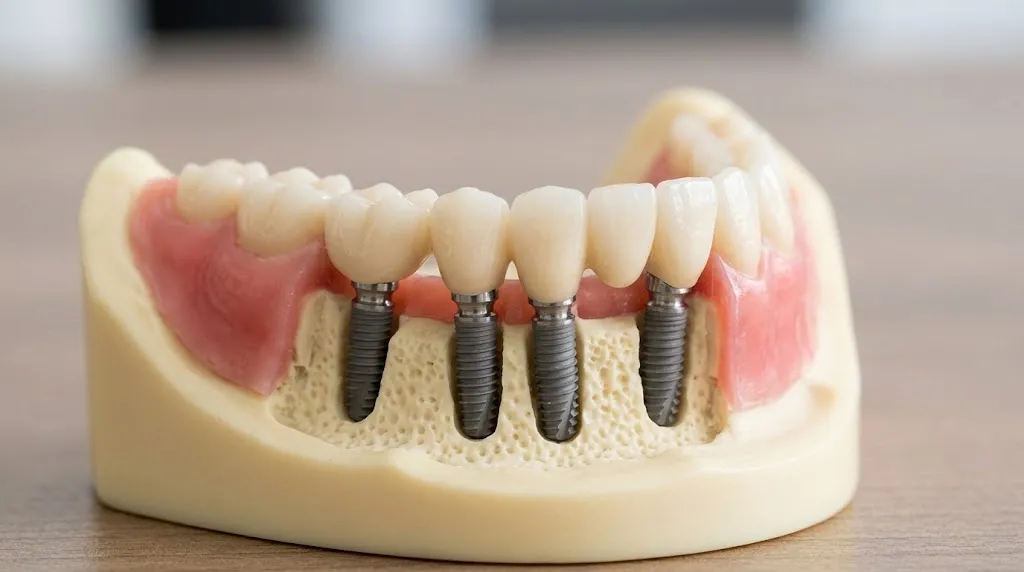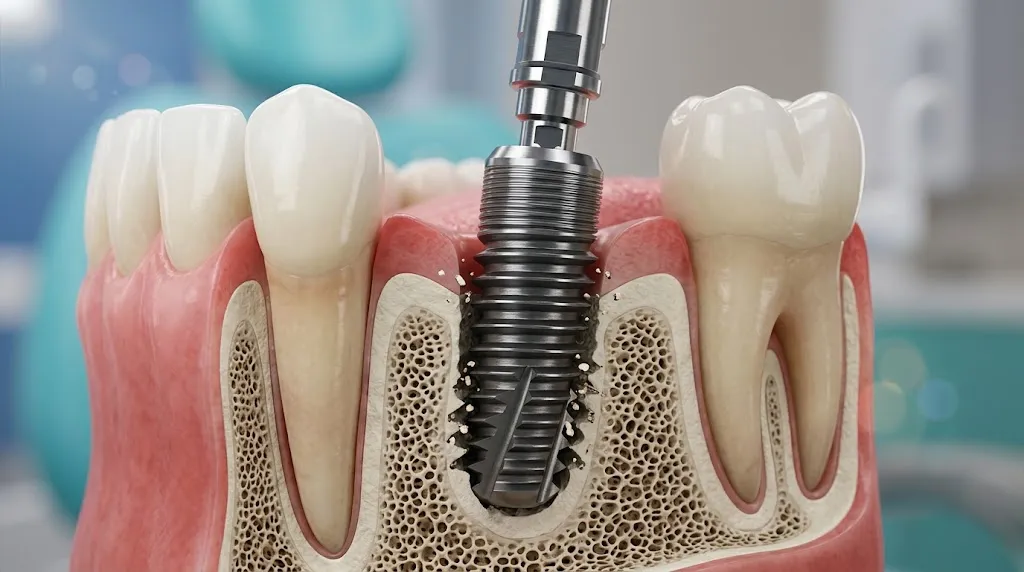
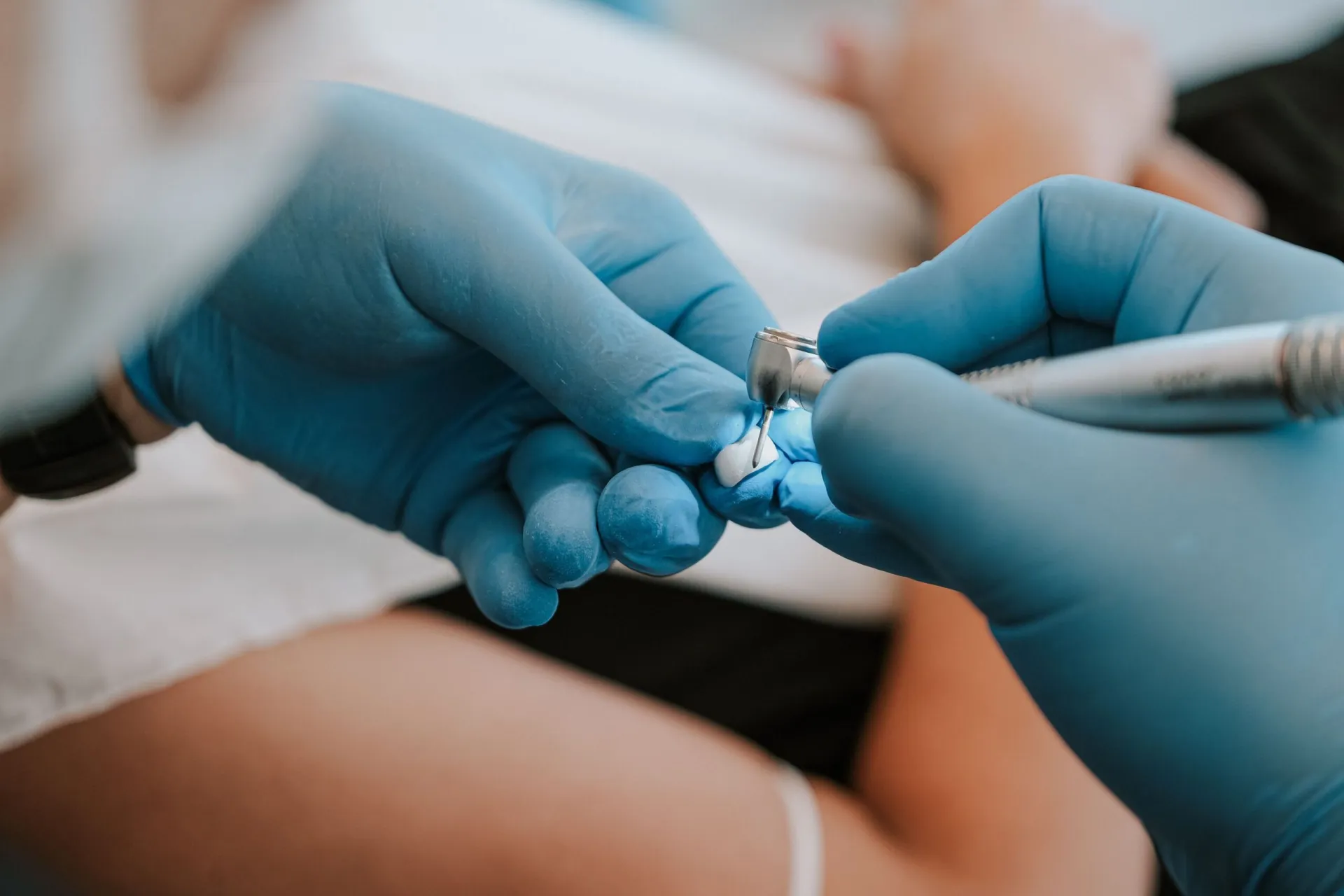
A ramus graft is the transfer of a bone block taken from the vertical part of the lower jaw behind the wisdom teeth (the ramus) to areas where an implant is planned but bone volume is insufficient. As an autogenous graft (the patient's own tissue), it has high biological compatibility. It is CT-planned and done under local anesthesia.
- The bone block is fixed to the recipient site with micro titanium screws.
- It restores volume in severe vertical and horizontal bone loss.
- Integration of the bone usually takes 3–4 months.
- Smoking impairs the graft's blood supply and increases the risk of failure.
- Cold compresses and a soft diet are recommended for the first 48 hours.
The ramus is the name given to the back part of the lower jawbone (mandible) that rises vertically (the area behind the wisdom teeth). A ramus graft is the surgical transfer of a block of bone taken from this area to sites where an implant is planned but bone volume is insufficient (usually in the front or back tooth areas).
It belongs to the class of autogenous grafts (the patient's own tissue), regarded as the "gold standard" in dentistry. Because it is the body's own bone, its biological compatibility is excellent; it stays viable at the cellular level and fuses quickly with the recipient site.
How Is Ramus Graft Surgery Performed? (Step by Step)
A ramus bone graft is usually performed in the clinic under local anesthesia, completely painlessly. Requiring advanced oral and maxillofacial surgery expertise, the process consists of the following stages:
-
Planning and 3D Modeling: The patient's jaw structure is scanned with CT (Computed Tomography). The bone volume at the donor site (ramus) and the deficiency at the recipient site are calculated to the millimeter.
-
Anesthesia: The area is numbed with local anesthesia so the procedure is comfortable. Sedation may also be considered for anxious patients.
-
Harvesting the Bone (Donor Stage): The ramus area is reached through a small incision at the back of the lower jaw that is not visible from the outside. A block of bone of the required size is removed with special surgical saws or piezoelectric (ultrasonic) devices.
-
Placing the Graft (Recipient Stage): The harvested bone block is shaped to fit the area with volume loss. It is screwed to the recipient bone with micro titanium screws to keep it stable. If needed, its surroundings are supported with bone powders (xenograft) and protective membranes.
-
Suturing and Closure: Both sites are closed with sterile sutures and left to heal.
Why a Ramus Graft? What Are the Advantages?
-
Zero Risk of Rejection: The risk of allergy or rejection, which can rarely occur with synthetic or animal-derived bone powders, is 0% with a ramus graft.
-
Fast, High-Quality Bone Formation: Because autogenous bone contains living cells and growth factors, it forms much faster and denser bone tissue than synthetic bone powders.
-
Significant Volume Gain: Especially in severe vertical and horizontal bone collapse, the block of ramus bone makes it possible to rebuild the jawline flawlessly.
-
Economical and Accessible: Compared with donor sites such as the hip (iliac crest) or skull, which require a hospital setting and general anesthesia, it is an intraoral site, so patient comfort is higher and the cost is more affordable.
The Healing Process and What to Watch Out For
After ramus graft surgery, full integration of the bone with the recipient site (osseointegration) usually takes 3 to 4 months. After this period, the micro screws are removed and implants are placed safely.
Golden Rules After Surgery:
-
Cold Compress for the First 48 Hours: Ice should be applied to keep swelling and bruising in the cheek area to a minimum.
-
Diet: For the first few days, avoid grainy, hot, acidic and hard foods; eat soft foods such as purées and soups at room temperature.
-
Oral Hygiene: Use the special antiseptic mouthwashes recommended by your dentist and do not brush the suture areas directly.
-
No Smoking or Alcohol: Smoking reduces blood flow in the capillaries, impairs the graft's nourishment and seriously increases the risk of failure. It must not be used during the healing period.
Frequently Asked Questions (FAQ)
1. Is ramus graft surgery painful?
No. Because the operation is performed under local anesthesia, no pain or discomfort is felt during the procedure. After the operation, the painkillers and antibiotics your dentist prescribes make recovery quite comfortable.
2. Does taking bone from the lower jaw leave a permanent gap or weakness there?
Bone from the ramus area is taken within safe limits (from the cortical layer) that do not affect the structural integrity of the jaw or chewing function. Over time the body repairs the area, and no aesthetic or functional loss is visible from the outside.
3. What is the difference between a ramus graft and ordinary bone powder (synthetic graft)?
Bone powders are usually in granular (sand-like) form and are effective for small defects. A ramus graft, on the other hand, is a block. In severe bone loss, a ramus graft is preferred when synthetic powders are not enough to add volume and height to the jaw. It also carries the patient's own living cells.
4. When is the implant placed after a ramus graft?
It is usually necessary to wait 3–5 months for the bone block to fuse with the site and become hard enough to support an implant. At the end of this period, an X-ray or CT check is done before moving on to the implant stage.
5. What is the success rate of ramus graft treatment?
In the literature and clinical studies, the success rate of autogenous ramus grafts is over 95%. The most important factors affecting success are the surgeon's experience, the patient's general health and, above all, not smoking during the healing period.
6. Is there a lot of facial swelling after surgery?
Because it is a surgical procedure, mild to moderate swelling in the cheek on the 2nd and 3rd days after surgery is normal. This is temporary and goes away completely within 4–5 days with ice compresses and the medication your dentist provides.
Implant treatment is a long-lasting investment that not only replaces missing teeth but also maximizes quality of life. The success of this investment undoubtedly depends on a healthy and sufficient bone foundation. Thanks to its biological compatibility and high success rate, a ramus graft prepares a rock-solid base for implants even in cases of advanced bone loss. To learn more about this modern surgical method that rebuilds your jaw with the strength of your own tissue and to have a personalized treatment plan created, you can consult a specialist oral surgeon. With the right planning and an expert touch, achieving the strong, aesthetic smile you dream of is much easier than you think.