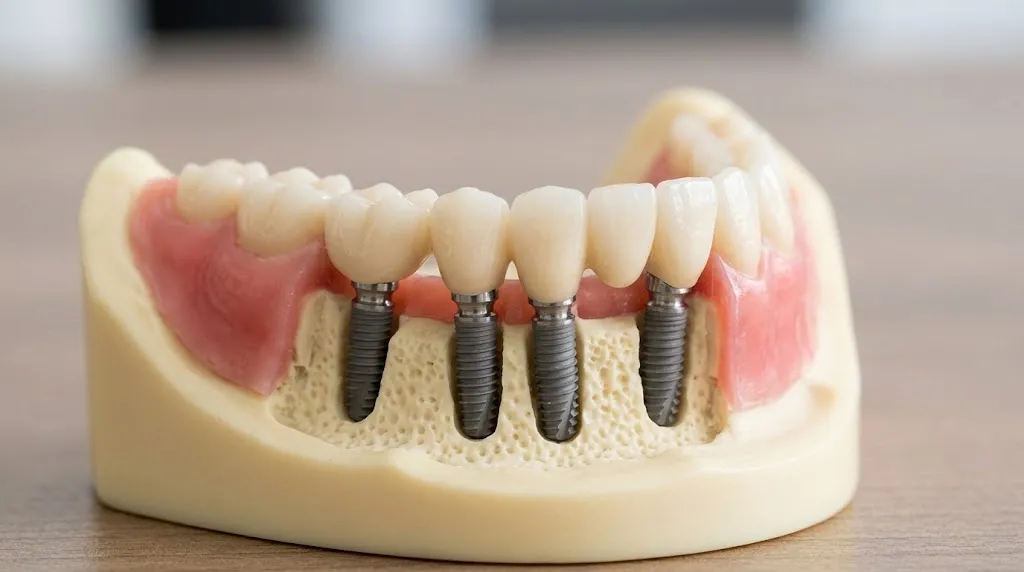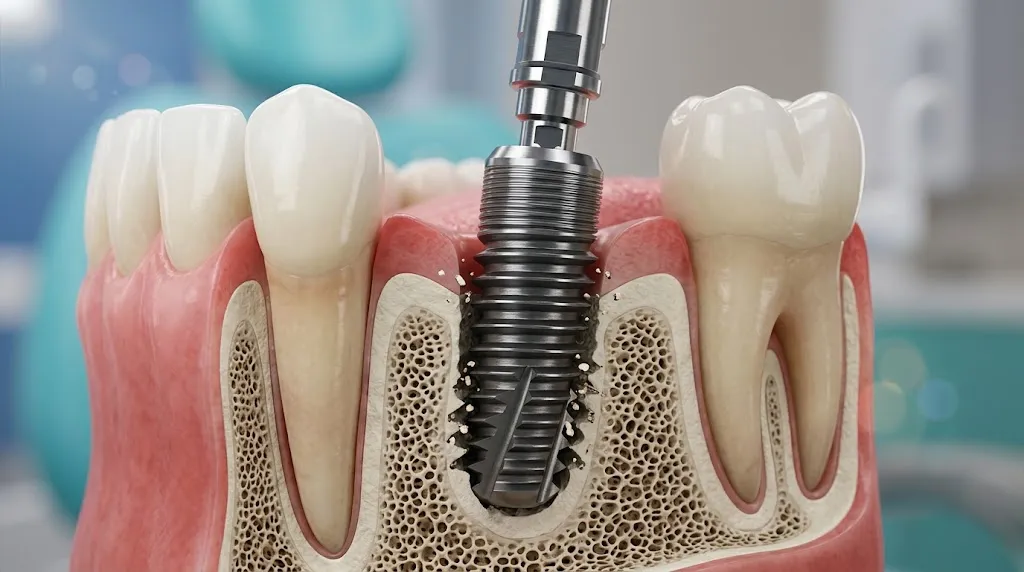
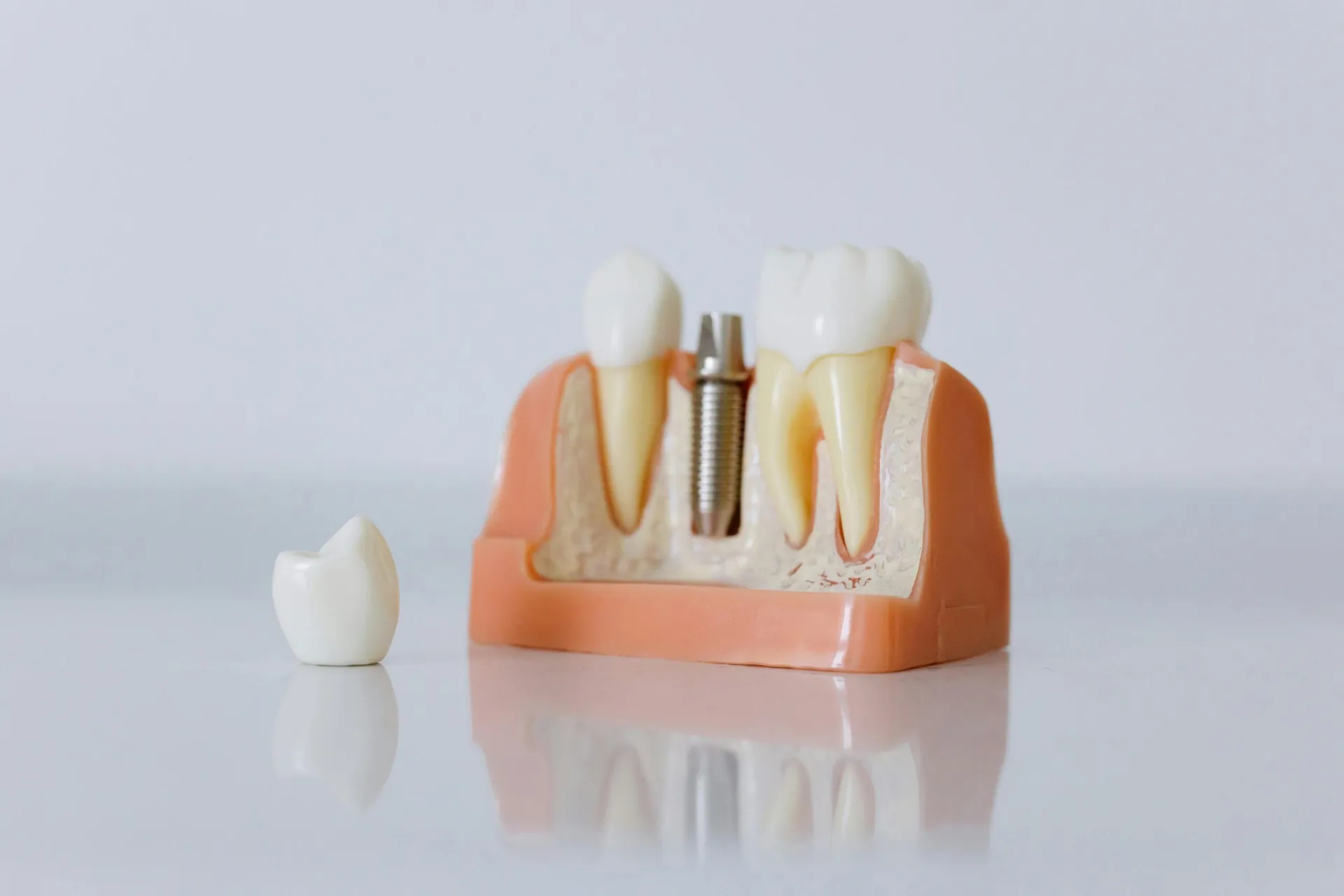
An abutment is the small connecting piece between the titanium implant screw placed in the jawbone and the visible prosthetic tooth (crown); the word means “support”. It is fitted after the implant has integrated with the bone. It attaches the crown to the implant, transfers chewing forces evenly to the bone and helps the gums take on a natural shape.
- Titanium abutments are durable and generally used for back teeth.
- Zirconia abutments prevent metal show-through in front teeth.
- Angled and custom abutment options are also available.
- A bone integration period of 2 to 6 months usually follows implant placement.
- The healing cap is removed, the abutment is screwed in and the permanent crown is fitted.
What Is an Abutment? What does it do? Implant treatment, today’s most permanent and aesthetic solution for patients with missing teeth, consists of several basic components. Among these, the abutment, or implant support, is critically important but often stays in the background, and it plays a key role in the success of treatment.
So, what is an abutment, what does it do and why is it important in the implant process? Here are all the details you may be wondering about.
What Is an Abutment?
An abutment is a small intermediate piece that connects the titanium implant screw placed in the jawbone with the prosthetic tooth (crown) that will be visible in the mouth. The word means “support” or “base”.
After the implant’s integration with the bone (osseointegration) is complete, it is attached to the implant and allows the prosthetic tooth to sit firmly on top.
What Does an Abutment Do? What Are Its Functions?
An abutment is not just a simple intermediate element connecting two parts. It has many vital functions during treatment:
-
Connection and Support: It firmly connects the implant screw and the crown.
-
Load Distribution: It takes the pressure created during chewing from the prosthesis and transfers it evenly to the bone through the implant.
-
Gum Contour: It helps the gums achieve a natural appearance and a healthy contour around the prosthesis.
-
Aesthetic Transition: Especially in the front teeth, it acts as an aesthetic barrier preventing the gray color of the metal implant from showing through the crown.
What Types of Abutments Are There?
Different types of abutments may be chosen depending on the patient’s oral structure, the position of the implant and aesthetic expectations:
-
Titanium Abutments: The standard type, with the highest durability, usually preferred for back teeth.
-
Zirconia Abutments: Used especially for front teeth, to prevent metal show-through and achieve a natural whiteness at the gums.
-
Angled Abutments: Used when the implant is placed in the bone at a slight angle, to keep the prosthesis properly aligned.
-
Custom Abutments: Produced with digital scanning specifically for the patient’s gum structure and tooth alignment, these options give the most natural result.
How Is an Abutment Placed?
After the implant is placed, a bone integration period of usually 2 to 6 months follows. At the end of this period:
-
The gum over the implant is opened with a minor procedure.
-
The healing cap (gingiva former) is removed and the abutment is screwed in its place.
-
Impressions are taken, and the permanent crown, prepared in the laboratory within a short time, is cemented or screwed onto the abutment.
Conclusion
The secret of successful implant treatment is not only choosing a quality implant but also using the right, high-quality abutment. The type of abutment your dentist recommends is very important for protecting your gum health and for a long-lasting prosthesis.
Don’t forget to consult an experienced dentist for the right planning and personalized solutions for your missing teeth.
For any questions about dental treatment, you can contact us.