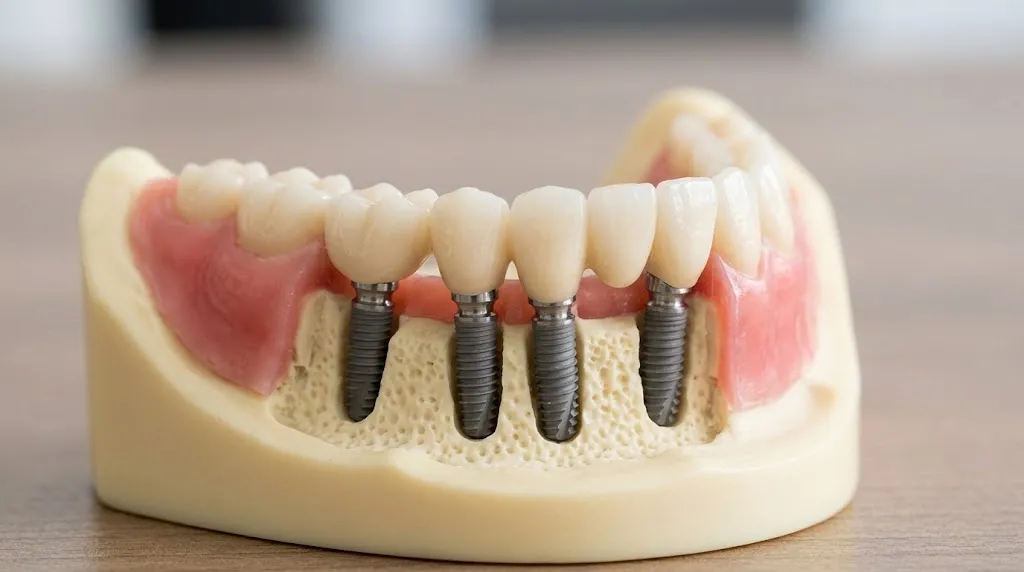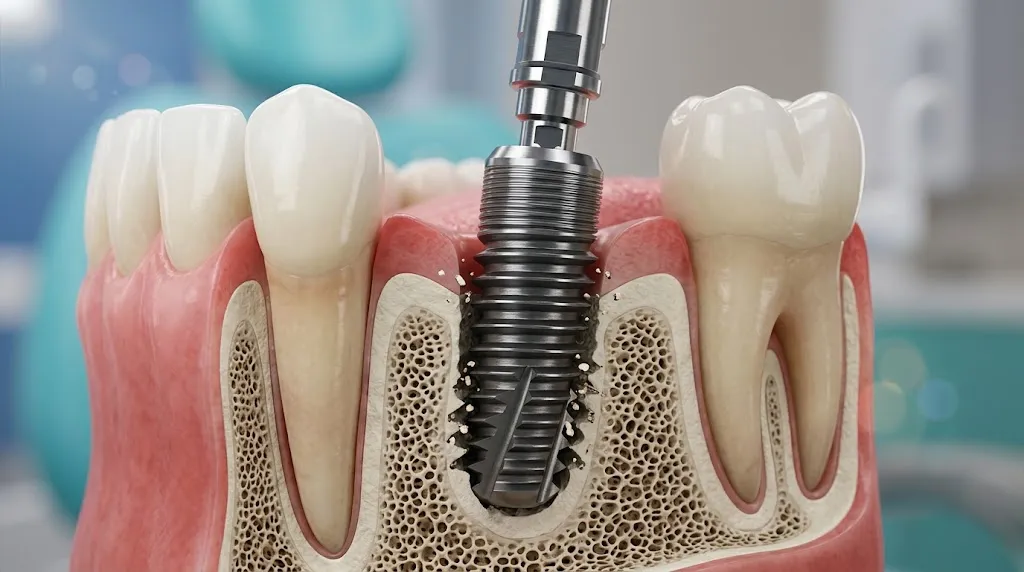
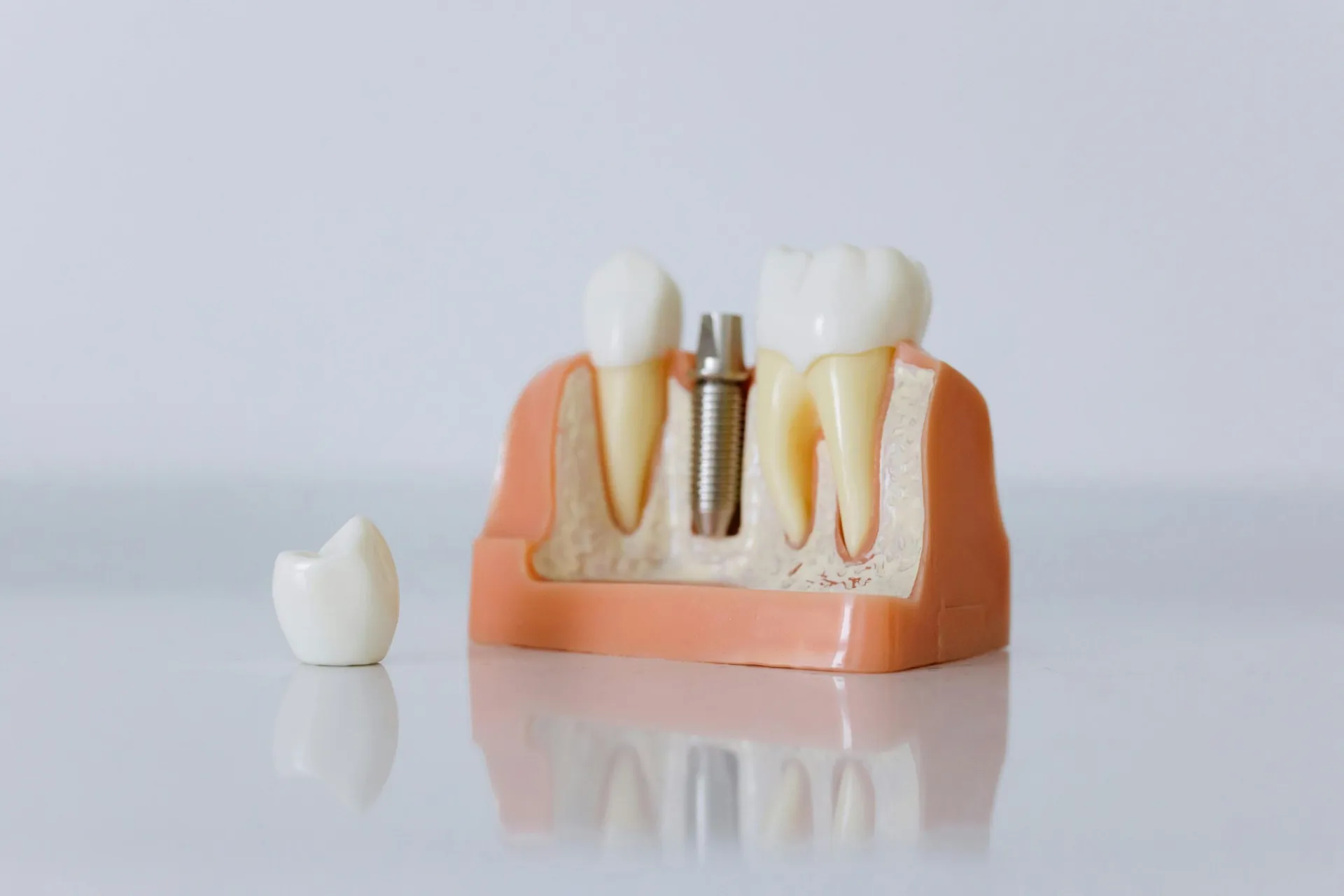
An implant usually fails because it cannot fully integrate with the jawbone. The most common cause is peri-implantitis, an infection that inflames the tissue and bone around the implant. Insufficient bone density, smoking, uncontrolled diabetes, faulty surgical technique and poor-quality materials are also major factors that increase the risk of implant loss.
- Looseness, pain, swelling and gum recession are signs of failure.
- Oral hygiene with interdental brushes and floss helps prevent implant loss.
- Six-monthly dental check-ups should not be skipped.
- Titanium implants are biocompatible; failure usually stems from infection or technical error.
- A failed implant can usually be replaced once the bone has healed.
Why do dental implants fail? An implant falling out or being "rejected" by the body (as it is commonly put) usually results from the implant not fully integrating with the jawbone. The main factors that lead to this are:
1. Infection Around the Implant (Peri-implantitis)
The most common cause of implant loss is an infection called peri-implantitis. Similar to gum inflammation, this condition inflames the tissues and bone around the implant, causing it to lose its support and fall out.
2. Insufficient Bone Density
For an implant to stay firm, it needs bone tissue of sufficient volume and quality. If the amount of bone is insufficient or a bone graft procedure has not been successful, the implant cannot hold onto the bone and may loosen and fall out over time.
3. Smoking and Tobacco Use
Smoking slows blood circulation in the mouth and delays tissue healing. Research shows that implant failure rates are much higher in smokers than in non-smokers.
4. Uncontrolled Diabetes
Systemic diseases such as diabetes reduce the body's healing capacity. In patients whose blood sugar is not under control, the risk of infection increases and the process of the implant fusing with the bone (osseointegration) is disrupted.
5. Faulty Surgical Technique or Material Quality
Placing the implant at the wrong angle, overheating the bone during the procedure, or using poor-quality, uncertified implant brands increases the risk of failure.
Signs of a Failing Implant
Some early warning signs that an implant is starting to fail are:
-
Looseness: A healthy implant never moves. Even the slightest wobble is a sign of failure.
-
Severe Pain and Swelling: Pain that starts after the healing period is over may indicate infection.
-
Gum Recession: Bluish discoloration or recession of the gum around the implant.
-
Difficulty Chewing: Discomfort felt when pressure is applied to the implant.
How Can Implant Loss Be Prevented?
To keep your implant in your mouth for a lifetime, pay attention to the following steps:
-
Prioritize Oral Hygiene: In addition to brushing, always use an interdental brush and dental floss.
-
Attend Regular Check-ups: Do not skip your dentist's six-monthly check-ups.
-
Quit Smoking: For implant success, stay away from cigarettes at least during the healing period.
-
Choose Your Dentist Carefully: Treatments performed by a specialist, experienced dentist have a minimal margin of error.
Frequently Asked Questions
Can a failed implant be replaced? Yes, usually a new implant can be placed after the area where the implant failed has been cleaned and the bone tissue has healed (with bone graft support if needed).
Is it possible for the body to reject an implant? Because implants are made of titanium, they are biocompatible; in other words, the body does not reject them as a "foreign substance". Failures are usually caused by infection or technical errors, not by biological incompatibility.
For all your questions about implant treatment and appointment requests, you can contact us.