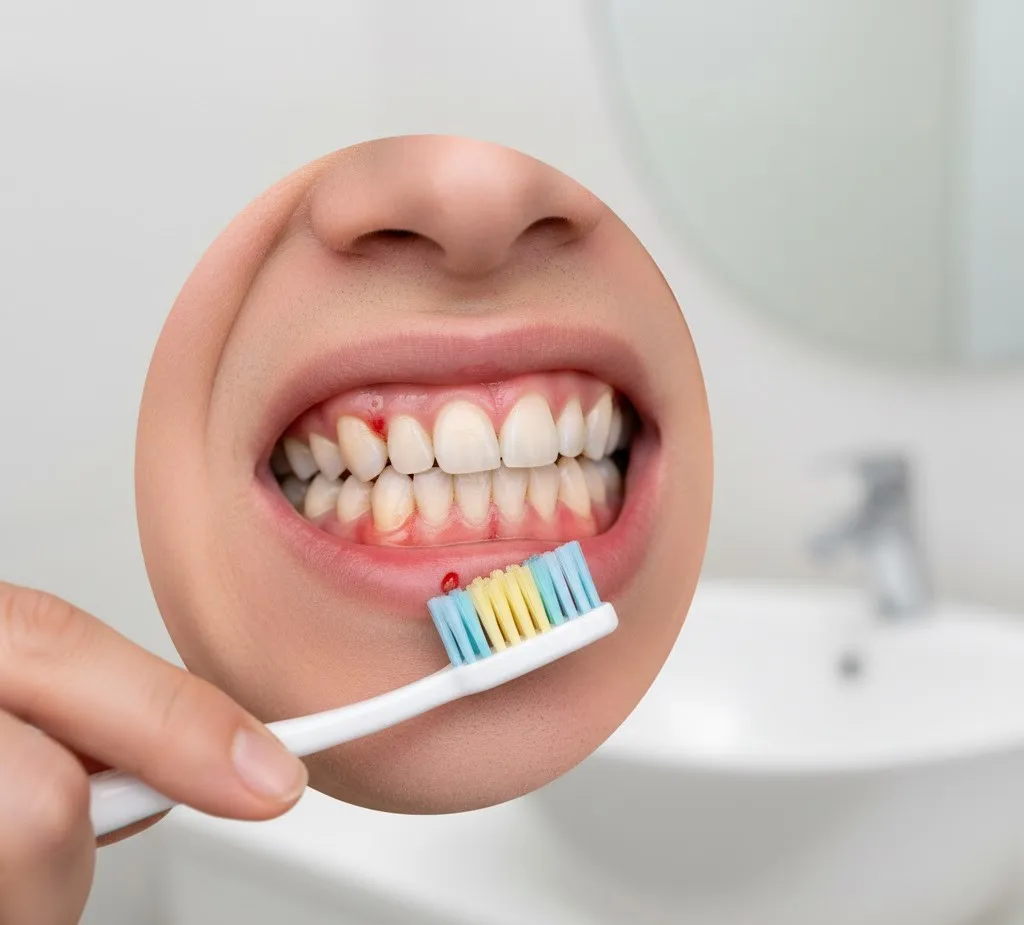
Gums most often bleed because of gum inflammation (gingivitis) caused by bacterial plaque building up on the tooth surface. Hard brushing, starting to floss, vitamin C and K deficiencies, hormonal changes in pregnancy, blood thinners, diabetes and clotting disorders can also cause bleeding. Untreated gingivitis can turn into periodontitis, a more serious condition involving gum recession and bone loss.
- Brush twice a day with a soft-bristled brush using circular movements.
- Regular flossing and salt water rinses can help reduce bleeding.
- If bleeding from flossing lasts more than a week, consult a specialist.
- Professional tartar cleaning at least twice a year is recommended.
- See a dentist if you have persistent bleeding, recession, bad breath or loose teeth.
Why Do Gums Bleed? The Most Common Causes
There is no single cause of bleeding gums; many factors, from lifestyle to systemic diseases, can lead to it.
1. Gum Inflammation (Gingivitis)
The most common cause is bacterial plaque building up on the tooth surface. Plaque that is not cleaned regularly causes inflammation of the gums (gingivitis). At this stage, the gums are red, swollen and prone to bleeding. If left untreated, it can turn into periodontitis, a more serious disease (gum recession and bone loss).
2. Incorrect and Hard Brushing Techniques
Brushing your teeth too hard or using toothbrushes with very hard bristles can damage gum tissue and cause bleeding. Gums are delicate tissues and should be cleaned with gentle strokes.
3. Starting to Floss
Slight bleeding is normal when you first start flossing or start again after a long break. However, if the bleeding lasts more than a week, you should consult a specialist.
4. Vitamin Deficiencies
Deficiencies in vitamins C and K in particular cause the gums to weaken and bleed easily. Vitamin C is critical for tissue repair, while vitamin K plays a role in blood clotting.
5. Pregnancy (Pregnancy Gingivitis)
Changing hormone levels during pregnancy make the gums much more sensitive to the bacteria in plaque. This is called "pregnancy gingivitis," and bleeding is common.
6. Systemic Diseases and Medications
Blood-thinning medications, diabetes or blood clotting disorders can increase gum bleeding.
How Can Bleeding Gums Be Prevented?
If your gums are bleeding, you can follow these steps to bring the problem under control:
-
Proper Brushing: Brush twice a day with a soft-bristled brush using circular movements, as if massaging your gums.
-
Regular Flossing: Remove bacterial plaque by cleaning between the teeth where the toothbrush cannot reach.
-
Salt Water Rinse: Rinsing your mouth with salt water can help reduce inflammation.
-
Watch Your Diet: Cut down on sugary foods and eat more fresh fruit and vegetables.
-
Professional Cleaning: Visit your dentist at least twice a year for tartar cleaning (scaling).
When Should You See a Dentist?
Bleeding gums should be taken seriously in the following situations:
-
If the bleeding is persistent,
-
If there is noticeable gum recession,
-
If there is constant bad breath,
-
If you feel your teeth are loose.
For any questions and appointment requests, you can contact us.