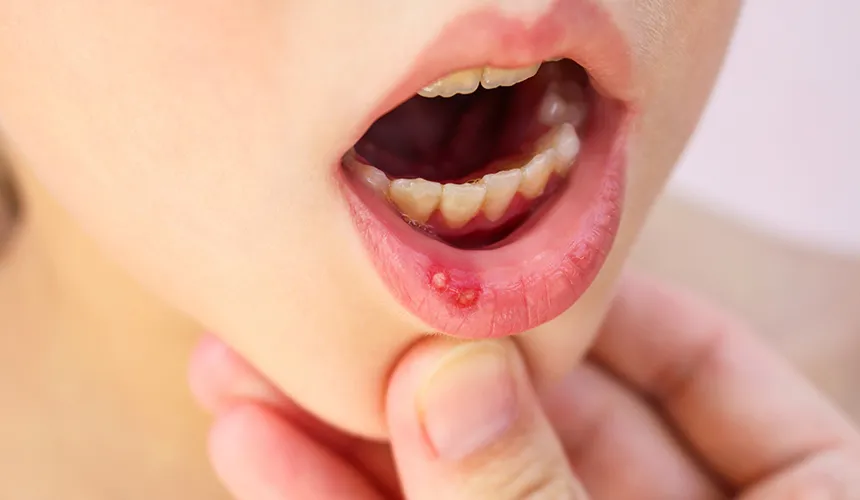
Canker sores (aphthous ulcers) are painful lesions with a white or yellow center and red edges that form on the soft tissues inside the mouth, the gums or the tongue. Unlike cold sores, they are not contagious. Weakened immunity, B12, iron and folic acid deficiency, stress, mechanical injuries, acidic foods and toothpastes containing SLS are the main triggers.
- Canker sores usually heal on their own within 7 to 10 days.
- Salt water rinses and topical gels can ease the pain.
- Avoid hot, cold and spicy foods while they heal.
- See a dentist or ENT specialist for sores lasting over 2 weeks or very large ones.
What Is a Canker Sore?
Canker sores (aphthous ulcers) are very painful lesions with a white or yellow center and red edges that form on the soft tissues inside the mouth, on the gums or on the tongue.
Although they are often confused with cold sores, there is an important difference: canker sores are not contagious. Cold sores usually appear outside the mouth (at the edge of the lip), while canker sores develop entirely in the mucous membrane inside the mouth.
Why Do Canker Sores Form?
If you are asking, "Why do I keep getting sores in my mouth?", there may not be a single reason. The triggers vary from person to person. Here are the most common causes:
-
Immune System: When the body's resistance is low, the tissues inside the mouth become vulnerable.
-
Vitamin and Mineral Deficiency: Deficiencies in B12, iron and folic acid in particular are the biggest invitation for canker sores.
-
Stress and Anxiety: Changes in hormone balance during periods of intense stress speed up the formation of canker sores.
-
Mechanical Injuries: Hard brushing, accidentally biting the cheek or rubbing from dentures.
-
Foods: Highly acidic fruits (citrus), spicy foods or gluten sensitivity.
-
Toothpastes: Toothpastes containing Sodium Lauryl Sulfate (SLS) can disrupt the mucous membrane in some people.
What Are the Symptoms of Canker Sores?
Canker sores usually announce themselves with a burning and tingling sensation in the area 1-2 days before they appear. Once they become visible, the following symptoms are seen:
-
Round, white or gray craters.
-
Intense redness and swelling around the sore.
-
Severe pain when eating hot, salty or acidic foods.
-
Rarely, fever or swollen lymph nodes.
Treating Mouth Ulcers and Canker Sores
Canker sores usually heal on their own within 7 to 10 days. However, the following methods can be used to speed up healing and ease the pain:
-
Salt Water Rinse: It acts as a natural disinfectant and supports healing.
-
Topical Gels: Pain-relieving gels sold in pharmacies that cover the sore like a protective film increase your comfort.
-
Diet: Avoid very hot, very cold or very spicy foods during healing.
-
Baking Soda Paste: A paste made with a little water and baking soda can be applied to the sore.
Important Note: If a sore in your mouth has not healed for more than 2 weeks, has spread over a very large area or is completely preventing you from eating, you should see a dentist or an ENT specialist.
Regular oral care and a balanced diet are your best allies in preventing canker sores.